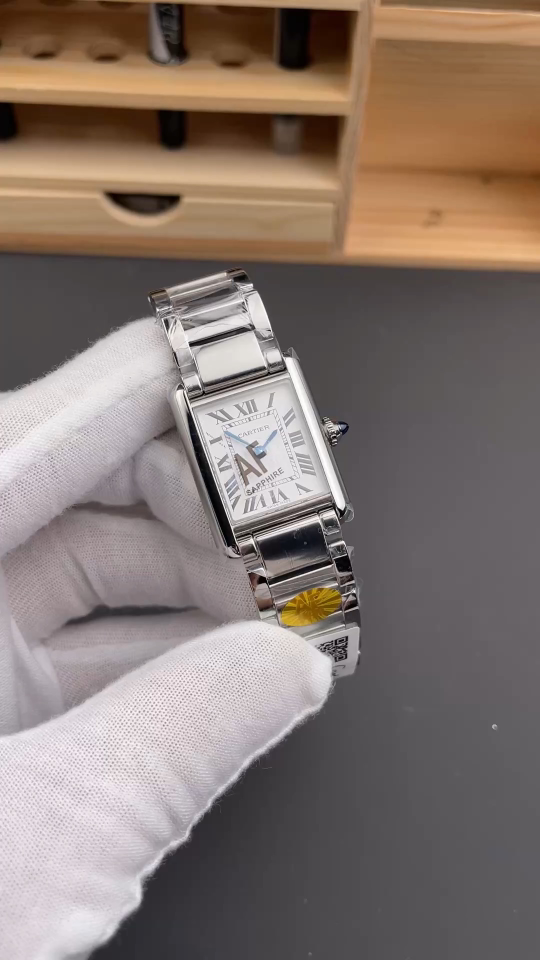
The depth rating in a "AAA-grade replica watches" listing is usually the genuine model's rating printed on a case that has never been pressure-tested. Water resistance is not a spec-sheet line; it is gaskets, threads and assembly quality, and all of it is invisible in photos. The practical question is what water contact you will risk with an untested watch, and the answer starts at almost none. This guide walks through the risk levels and how to turn the unknown into a known.
What "300m water resistant" means on a genuine watch
On a genuine dive watch, the rating is earned rather than printed. Dive watches certified to ISO 6425 are pressure-tested, and the case is sealed by gaskets at the crown, crystal and caseback, with a screw-down crown as the norm. The depth-number system itself — what 30m, 100m and 300m actually permit in daily use — is laid out in watch water resistance explained. A genuine Submariner or Seamaster is built for immersion; the rating describes construction, testing and a warranty behind it. Even a genuine rating decays: gaskets age, and most brands recommend a pressure test whenever the case is opened, or every year or two for regular dive use.
What it means in a replica listing
It is text on the dial and in the ad. There is no test, no certificate and no recourse when the case floods. The same "300m" print appears on watches assembled with inconsistent gasket quality, because the print costs nothing and the testing costs everything. Factory comparisons such as the VS factory discussions show how sellers describe their sealing work — again, seller description rather than verification.
The parts that actually keep water out
- The crown gasket and the screw-down threads behind it
- The caseback gasket and how evenly the back seats
- The crystal seal
- The helium escape valve on dive models — on a genuine Omega Seamaster it is an engineered opening that seals; a cosmetic valve on a copy is an extra leak path
A single failed seal among these decides the outcome — water needs one opening, not four.
Why any number can be printed
Nothing stops a workshop from engraving "300m" on a case that would fail a 30m test. The print is cosmetic, and genuine watches carry it because the testing happened; copies carry it because the genuine watch does. Genuine 30m watches typically carry "water resistant" wording rather than a large depth print on the dial, so a dial that shouts 300m is making a claim the case may never have earned. That asymmetry is the whole problem in one sentence: the rating is the easiest part of a dive watch to copy and the hardest part to earn.
The risk ladder
- Dry wear. Safe for any watch, and the default for anything untested.
- Rain and handwashing. Usually survivable even for poorly sealed watches — but not guaranteed, and a flooded dial is the price of being wrong.
- Swimming and showers. Require a verified seal. Untested watches should stay away from water; hot water and soap also defeat aging gaskets on genuine watches. The shower in particular combines heat, soap and steam, the three things that degrade seals fastest.
- Diving. Only for a tested, serviced dive watch you can afford to lose.
Condensation: the early warning
Fog inside the crystal is the first sign that water or humid air has already entered. On a genuine watch it means service is overdue; on an untested copy it means the case never sealed. Either way the response is the same — stop wearing it near water and get the case opened — because condensation is evidence of ingress that has already happened, not a risk that might. If it fogs, dry it thoroughly and have it serviced; heat sources such as radiators or hair dryers can force moisture deeper.
How to turn the unknown into a known
A watchmaker's pressure test costs little and measures what the dial only claims. Until one is done, treat the printed rating as decoration and behave accordingly. The background on ratings, servicing and what they assume is collected in the FAQ.
The short version
If the watch was sold as a replica, assume no water resistance regardless of the dial. If it must touch water, have it pressure-tested first and keep the test receipt — it is the only water-resistance claim that means anything.
Frequently asked questions
Can any unauthorized copy really withstand 300 meters?
There is no way to know without a pressure test. Until one is done, treat any printed rating on an untested watch as decoration.
What does a 3 ATM rating permit?
Handwashing and light rain only — and the same caution applies to an untested watch at any printed rating.
Why is the helium valve a risk on copies?
A cosmetic valve is an extra opening into the case. If the seals are poor, it leaks where a genuine valve is engineered to hold.
Can a watchmaker test water resistance?
Yes. Dry and wet pressure testers can verify case sealing for little cost, which settles the question the dial cannot.
본 콘텐츠는 일반적인 시계 교육용입니다. 개별 제품을 검증하거나 정품임을 보증하지 않으며, 제3자 브랜드나 공장과 무관합니다.