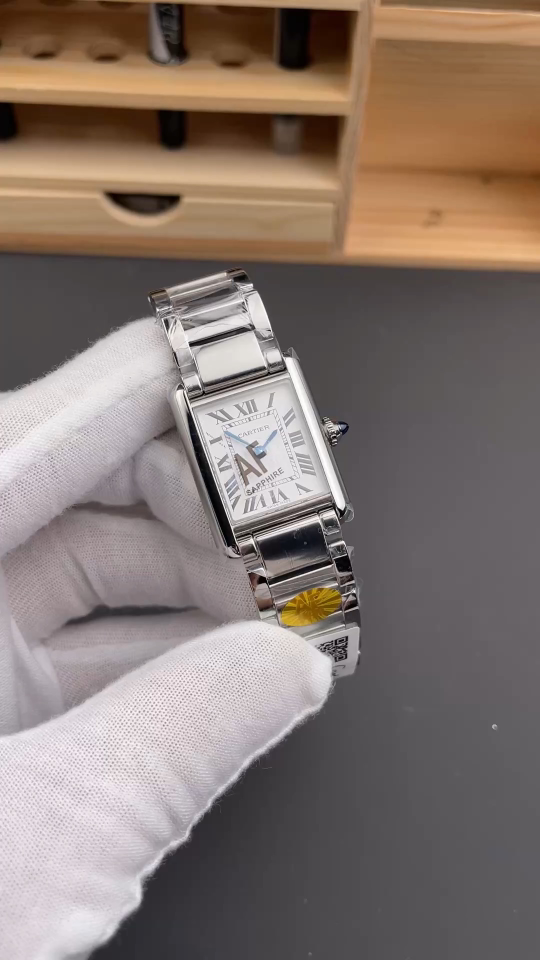
Most grade language in watch listings, AAA, AAAA, 5A, Swiss, 1:1, has no agreed definition anywhere, which makes listing claims the seller's opinion until something verifiable appears. The practical risk is not the vocabulary itself; it is paying for qualities that the listing merely asserts. This guide gives you a short decision path for separating description from decoration on AAA-grade replica watches listings.
The claims to decode
AAA, AAAA, and 5A grades
A seller's own tier ladder, with no standard behind it. Two sellers' AAA can be different watches. What the tiers actually are, and are not, is covered in our grading claims guide.
Swiss movement
Often stretched to mean movement in a Swiss style. A branded Swiss movement is verifiable from a photo; the phrase alone is not.
1:1 with genuine
Marketing shorthand for close. No listing can establish dimensional identity, and the claim is unverifiable without both watches on a bench.
Tested waterproof to 30 m
A test claim with no named standard and no certificate that can be checked. A real pressure test happens on a specific watch by a tester; see our water resistance explainer.
Real sapphire crystal
Checkable only partly: sapphire behaves differently from mineral glass under a water-drop test and in hardness, but confirming it from a photo is not possible. A macro video of a water-drop test on this specific watch would go partway; a stock photo proves nothing.
Certificate of authenticity
A seller-issued card is not a brand document. It certifies nothing except that the seller printed it. The only document that matters is one the brand can confirm, and a brand-confirmable document exists only for genuine watches.
What a verifiable listing actually looks like
The useful comparison is not between grades; it is between listings that show and listings that tell. A listing that shows a clear movement photo, a video of the watch running, macro shots of the dial and caseback, and a named condition report gives you material to check against. A listing that tells you it is 5A, Swiss, and 1:1 gives you adjectives to take on trust. None of that makes the showing listing genuine, and the evidence can all be borrowed from another watch, but evidence is at least falsifiable: a movement photo either matches the architecture it claims or it does not, and a description alone matches nothing at all.
The three-question path
Run every claim through three questions.
- Does the listing define the term against a published standard? If the grade or testing refers to nothing you can look up, it is opinion.
- Is the claim checkable from the photos? Movement type and finishing are; internal parts and test results are not.
- Does the seller show evidence, a movement photo, a test video, a named shop? A claim with no evidence costs you nothing and proves nothing.
Three no answers mean the claim is decoration. That does not make the listing dishonest; it makes it unverified, and unverified claims are what they have always been: a reason to ask, never a reason to pay more.
What misleading means in practice
Consumer protection rules in the United States, the EU, and most other markets prohibit material misrepresentations in sales, statements a reasonable buyer relies on when deciding. A fake test certificate or a genuine-movement photo that does not match the shipped watch crosses from puffery into misrepresentation, and marketplaces additionally prohibit counterfeit listings under their own policies regardless of what the seller discloses. Sellers rely on the gap between assertion and enforcement; buyers close the gap by checking before paying. The gap is structural: sellers grade their own work, buyers rarely test the grade, and the cost of checking falls on the person least able to check it, the buyer who has not yet received the watch. That asymmetry is why the three questions earn their keep.
Where the honest information lives
Independent verification beats listing language every time. Our counterfeit identification guide covers the inspection points, and the factory terminology explainer decodes the workshop names sellers attach. Read the listing the way a watchmaker reads a watch: claims are hypotheses, and only what survives inspection becomes fact. Start there before any listing vocabulary, and the vocabulary loses its power to set the price.
Frequently asked questions
What should I ask a seller about a Swiss movement claim?
For a movement photo. A branded Swiss movement is identifiable in a clear picture; a seller who will not show one is asking you to take the phrase on trust.
Are 1:1 claims ever true?
Not verifiably. Dimensional identity requires both watches and measurement equipment, which no listing provides, so the term functions as enthusiasm rather than fact.
Is a seller's certificate of authenticity worth anything?
As a brand document, no. Brands issue their own papers for genuine watches. As a seller's receipt it records what you bought, which is sometimes useful, and nothing more.
Can a fake water-resistance test be spotted?
A listing cannot show a real test. Only a pressure test on the watch in your hands confirms anything, so treat every printed or claimed rating as unverified.
본 콘텐츠는 일반적인 시계 교육용입니다. 개별 제품을 검증하거나 정품임을 보증하지 않으며, 제3자 브랜드나 공장과 무관합니다.