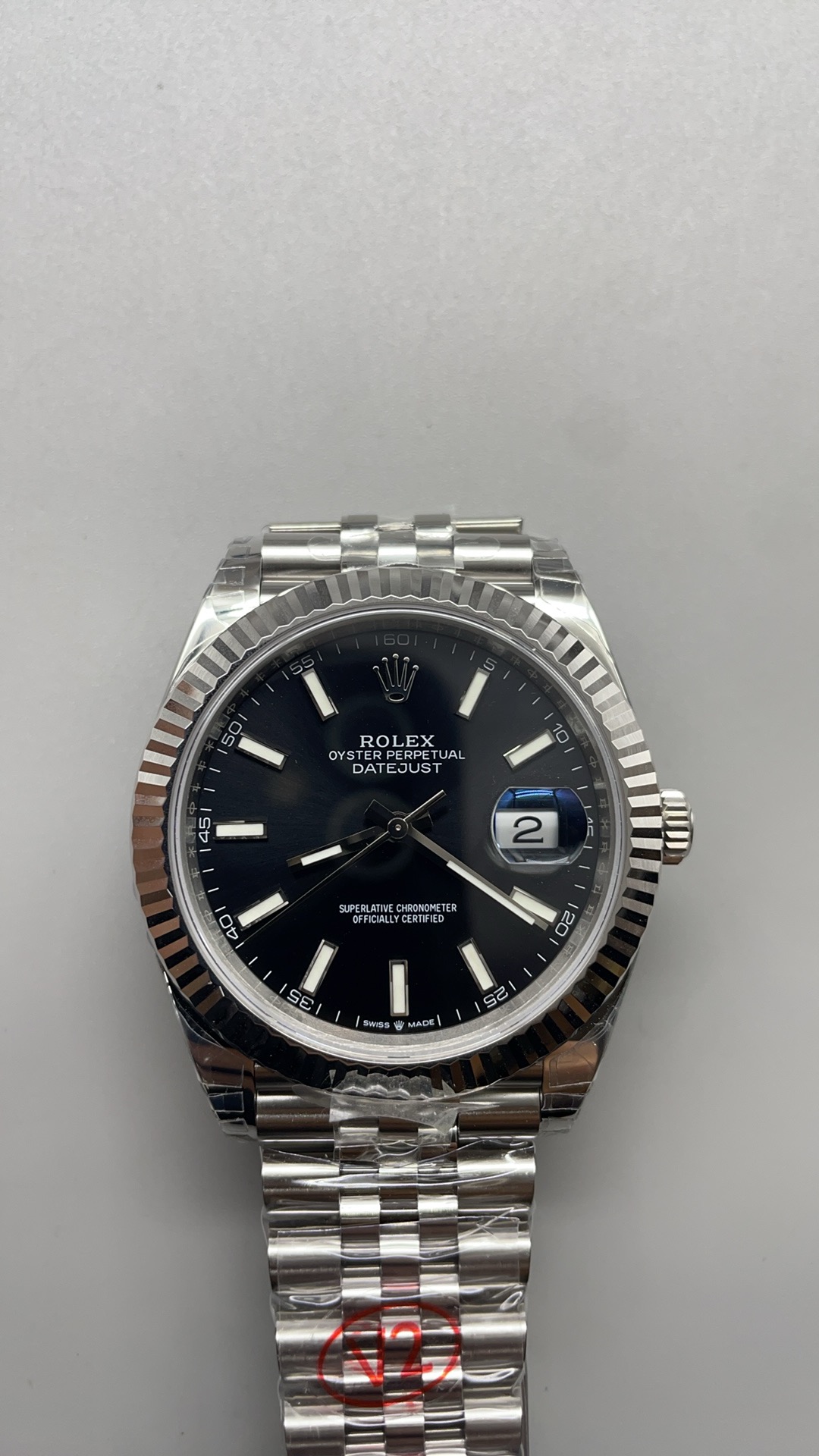
A watchmaker tests case, crystal, and bezel material claims on a NOOB-labeled watch with a magnet, a scale, a thermal gem tester, calipers, and a loupe — roughly in order of cost and speed. Steel is checked with a magnet, precious metal with weight and density, sapphire with a gem tester, and ceramic against aluminum by touch and magnification. Each check is also a decision point: claims that fail the cheap tests get rejected before money is spent on deeper ones.
Decision 1: The steel claim
The magnet test takes ten seconds. Both 904L and 316L are austenitic stainless steels, so both are essentially non-magnetic — a case that jumps to a magnet is not the claimed steel, full stop. What the magnet cannot do is separate 904L from 316L; that distinction needs laboratory analysis, usually X-ray fluorescence. The practical consequence: a seller claiming 'verified 904L' has almost certainly not done the only test that verifies it. If steel composition matters to the purchase, treat the claim as unverified unless lab paperwork accompanies it. The same logic screens titanium claims: titanium is non-magnetic and roughly half the density of steel, so the scale tells the two apart instantly — a 'titanium' watch that weighs like steel is steel. Background on how these materials compare sits in our case materials comparison.
Decision 2: The crystal claim
Sapphire versus mineral glass is decided with a thermal gem tester, an inexpensive probe that responds differently to the two materials. The water-drop test you may have read about is folklore and does not decide the question. The loupe adds the brand-specific check: modern Rolex crystals carry a tiny laser-etched crown at 6 o'clock, a genuine production feature that clones render crudely or miss entirely. On Rolex-style models the loupe also checks the cyclops date lens — genuine magnification is roughly 2.5x with a crisp window, and a weak or distorted lens is one of the easiest tells to confirm. Anti-reflective coating is the third clue: sapphire usually carries AR on the underside, and its absence on a watch that should have it is a mismatch worth noting.
Decision 3: The bezel claim
Modern Rolex dive bezels are ceramic: denser and harder than the aluminum inserts of older models, with numerals engraved and filled rather than painted. Older aluminum inserts are lighter and painted, which is why they fade and scratch over decades. The check is visual and tactile — a 10x loupe shows paint texture on aluminum and a clean, machined edge on ceramic — and no watchmaker scratches a bezel to test hardness. A NOOB-labeled watch billed as ceramic that shows painted lettering at 10x is aluminum, and the claim fails on the spot. Lume enters the same pass: a UV lamp charges luminous material instantly, and a watchmaker notes how long the glow lasts and whether it fades evenly. Modern lume should glow evenly and outlast a quick check; weak, blotchy, or dead lume says the dial was not made to the spec the case is pretending to. For how case size interacts with these details, see our case size guide.
Decision 4: The precious-metal claim
A 'solid 18k gold' watch that weighs like steel fails the simplest test: the scale. Gold is roughly twice as dense as steel, and the difference is obvious in the hand before any instrument is used. Density testing makes it precise — weighing the watch in air and in water computes specific gravity, with steel around 8.0, 18-karat gold roughly 15 to 16, and platinum about 21.4. Hallmark stamps confirm what a density result already says, never the other way around, because stamps are the cheapest thing a counterfeiter can fake.
The decision order, at a glance
- Magnet — screens the steel claim in ten seconds.
- Scale and density — settles any precious-metal claim.
- Gem tester and loupe — decides sapphire versus glass and checks engraving.
- Touch and loupe — separates ceramic from aluminum.
Walk away when the seller refuses inspection, when 'verified' materials come with no paperwork, or when the price assumes materials the tools say are not there. The pattern repeats across every replica claim, as detailed in the NOOB factory background guide, and it applies to any watch whose listing leans on material adjectives instead of measurements.
Frequently asked questions
Can a magnet identify 904L steel?
No. Both 904L and 316L are weakly magnetic austenitic steels, so a strong pull flags a different material, but only laboratory analysis such as XRF separates the two from each other.
How do you tell sapphire from mineral glass?
A thermal gem tester responds differently to sapphire, and a loupe check for the laser-etched crown at 6 o'clock on Rolex crystals adds a brand-specific confirm. The water-drop test does not decide the question.
Do ceramic bezels fade?
No. Ceramic keeps its color and resists scratching; fading and scratching are traits of the older painted aluminum inserts. Paint texture visible under a loupe is the giveaway that a bezel is aluminum.
What is a density test?
Weighing a watch in air and then in water computes its specific gravity. Steel measures around 8.0, 18-karat gold roughly 15 to 16, and platinum about 21.4, so the test exposes a gold claim on a steel case.
Questo contenuto è a scopo di educazione orologiera generale. Non verifica alcun singolo prodotto né garantisce l'autenticità, e non è affiliato a marchi o fabbriche di terzi.