Water-resistance and sealing claims are the hardest replica claims to verify, because the only real test is a pressure test done with equipment most buyers do not own. The practical answer is a decision: check the visible sealing hardware yourself, understand what the depth rating actually promises, and treat an unofficial watch as splash-resistant unless a pressure test proves otherwise. The risk is asymmetric — a failed "200-meter" claim is discovered underwater, at the cost of the movement.
Start with what the claim even means. A "water resistant" marking is not "waterproof" — no watch sold as water resistant is waterproof — and depth numbers describe static laboratory pressure, not real-world diving. The common tiers, covered fully in our water resistance explainer, run roughly: 30 meters for splashes and rain, 50 meters for brief immersion, 100 meters for swimming and snorkeling, and 200 meters plus for scuba, with genuine dive watches certified to ISO 6425 on top. A replica listing that stamps "300 m" on a watch with unknown seals is borrowing a number, not a rating.
The tools watchmakers use
Professional shops verify resistance with two classes of machine. Dry testers pressurize the case with air and measure deformation or leakage; wet testers submerge the watch in a pressurized water chamber and watch for bubbles. Both detect the same physics — a leak path through gaskets, crystal seat, crown tube, or case-back seal. These are shop machines, and the way to use one is a service visit: some independent watchmakers will pressure-test an unofficial watch for a fee, while others decline work on counterfeit products. Ask before you book. The deeper catch, explained below, is what happens when the test fails.
On an unofficial watch the seals themselves are the unknown. Gaskets may be the wrong size, dried, or missing; crown tubes may have loose threads; crystals may sit unevenly. None of that is visible in a listing photo, and the words "factory-tested" in an ad are a seller's assertion with no test report behind it.
The visual checks you can do at home
- Pull the crown out and look at the tube for a visible gasket or O-ring.
- Check that the crown screws down firmly and threads smoothly, not loosely or at an angle.
- Open the case back and confirm the case-back gasket is present, round, and unkinked.
- Look at the crystal edge under a loupe for even seating around the full circumference.
- Check the case-back threads and gasket groove for dirt, burrs, or dried material.
None of these checks proves anything — a visually perfect gasket can still fail under pressure — but missing or damaged hardware shows the claim is not even plausible. For the broader discipline of matching listing claims to physical evidence, see our counterfeit identification guide.
The decision: to test or not to test
The real question is not which tool to buy; it is whether to run the test at all. Work through it as a decision, because the outcomes are asymmetric:
- If you will never take the watch near water, the claim is irrelevant — skip the test and treat the watch as unrated.
- If you plan to swim with it, the claim matters. A shop test costs a small fee; the alternative is discovering the truth in the water.
- A wet test that fails floods the watch immediately. Dry testers and a watchmaker's caution can reduce, but not remove, that risk.
- On an unofficial watch, nobody is liable for a flooded movement. No warranty, no service center, no replacement — the risk is entirely yours.
- If the test fails, decide before you test whether you would pay to reseal the watch. If not, the result is information you cannot use.
What the rating means on a genuine watch, by contrast
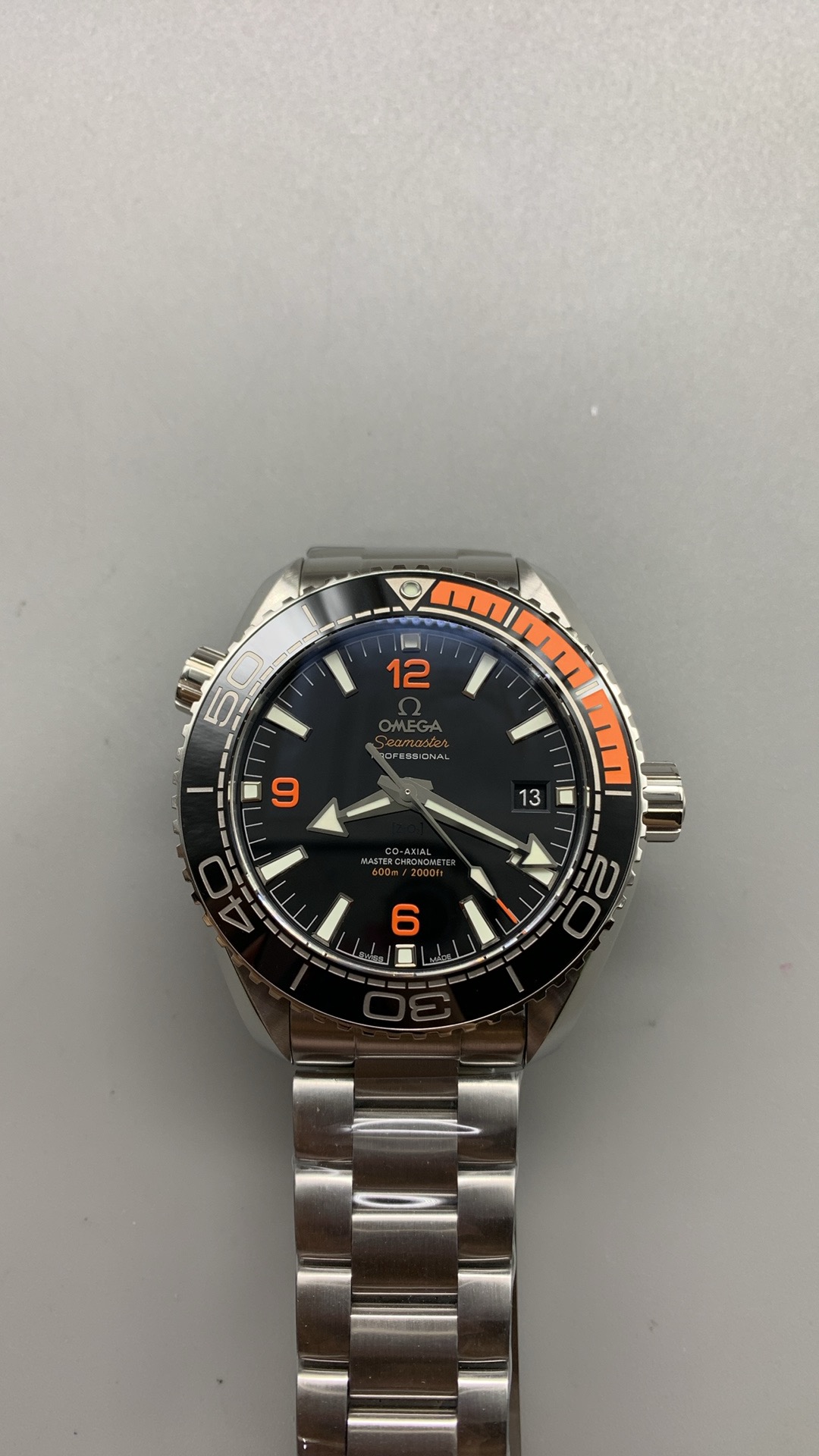
Genuine dive watches earn their numbers with design and certification: screw-down crowns, multiple gaskets, and — on models like the Omega Seamaster line — ISO 6425 dive-watch certification with per-piece testing in production. A pressure test on a genuine watch confirms a designed, documented system. On a replica, the same test confirms only what one example does on one day. The distinction matters more than the number on the dial; the diver versus chronograph comparison covers the tool-watch logic behind it.
Treat the seller's "waterproof 300 m" claim the way you would treat any other claim on an unofficial product: unverified until measured. If the watch matters to you and water matters to you, spend the test fee before the swim — or accept that the watch is effectively unrated and keep it dry. Either choice is rational; the only irrational one is trusting a stamped number on a watch with unknown seals.
Frequently asked questions
What is the difference between water resistant and waterproof?
"Water resistant" describes protection against water under stated conditions; no consumer watch is honestly sold as waterproof. Depth ratings refer to static pressure tests, not real swimming or diving depths.
Can I test water resistance at home?
Not meaningfully. A glass of water at room pressure tests nothing that matters. Depth ratings involve pressure that only a dedicated dry or wet tester can produce.
What does ISO 6425 mean?
It is the international standard for dive watches, covering requirements such as water resistance, legibility, and bezel function. Genuine dive watches are certified to it; unofficial copies are not.
Will a watchmaker pressure-test a replica?
Some independent watchmakers will, for a fee; others decline work on counterfeit products. Ask before booking, and understand that a failing test can flood the watch.
Dieser Inhalt dient der allgemeinen Uhrenbildung. Er verifiziert kein einzelnes Produkt und garantiert keine Echtheit; zudem besteht keine Verbindung zu Drittmarken oder -fabriken.