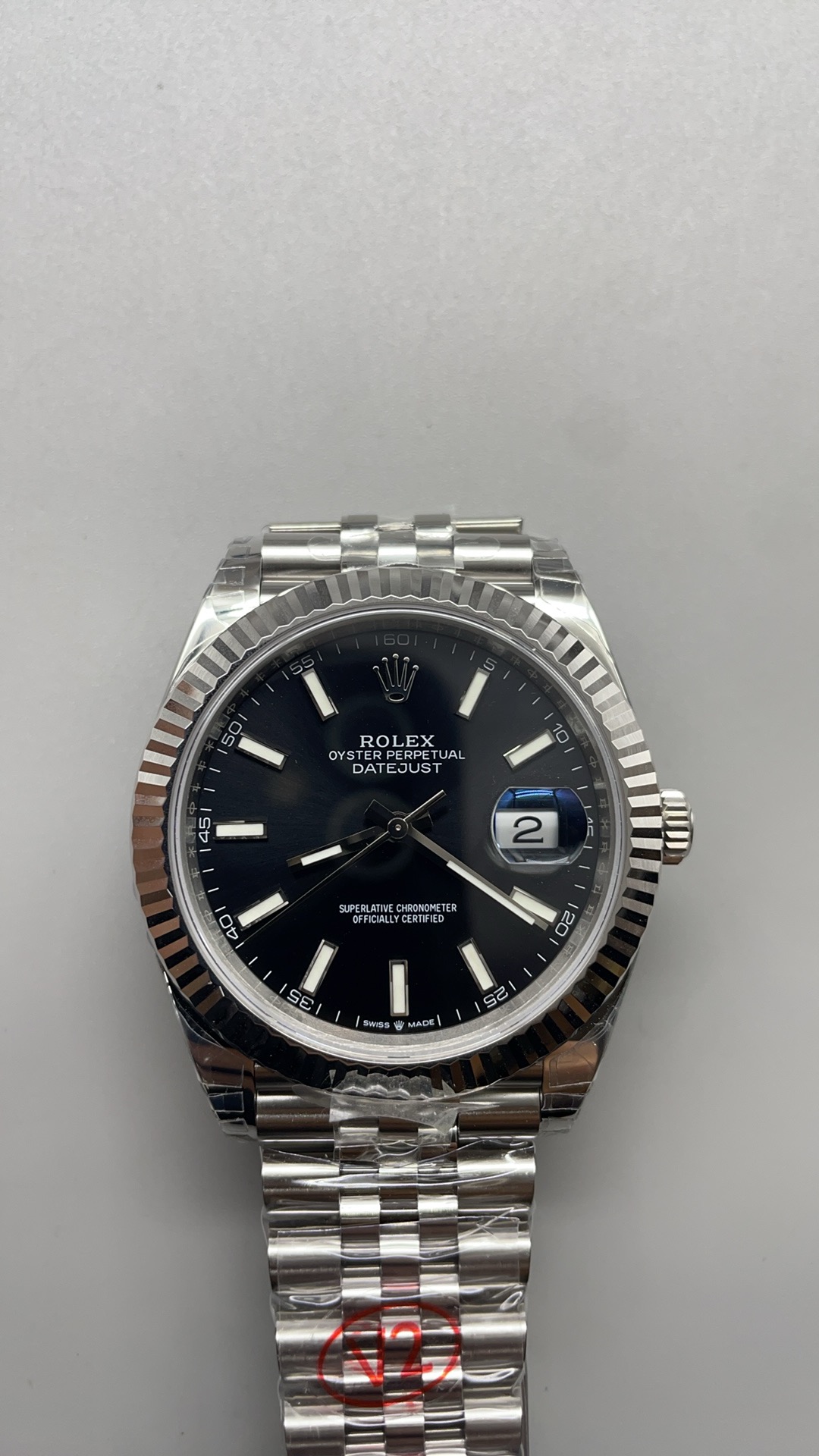
Case, crystal, and bezel material claims are screened with four cheap tools: a strong magnet, a digital caliper, a jeweler's scale, and a UV flashlight, plus a loupe for the fine print. Each tool tests one physical property — magnetism, dimensions, weight, or light response — and each answer is a screening result, not a certificate. The honest conclusion is usually "consistent with" or "inconsistent with" the claim rather than a verdict.
Why the caution? Because "AAA-grade replica" is a seller label with no test behind it, and because material claims — "904L steel," "sapphire crystal," "ceramic bezel" — are exactly the claims a listing can borrow from a genuine watch's spec sheet without borrowing the materials. Our overview of replica grading claims covers how such labels are actually used.
The claim-versus-tool table
| Claim being tested | Tool | What you can observe | Limit of the test |
|---|---|---|---|
| Solid stainless steel case (316L or 904L) | Magnet, scale, caliper | Austenitic stainless steels are essentially non-magnetic; steel density is about 7.9 g/cm³, so a steel case feels dense for its size | Plated brass is also non-magnetic and lighter, so a magnet alone cannot confirm steel |
| Sapphire crystal | UV flashlight, loupe | Sapphire responds to UV differently from mineral glass and resists scratching by steel (Mohs 9 versus about 5.5 for steel) | UV response varies with coating and lighting; scratch testing is destructive |
| Ceramic bezel insert | Loupe, fingernail test | Ceramic is hard, glossy, and cool to the touch; it does not scratch like anodized aluminum | Painted or coated metal can imitate the look at arm's length |
| Titanium case | Magnet, scale | Titanium is non-magnetic and roughly 45 percent lighter than steel (about 4.5 g/cm³) | Light weight alone cannot separate titanium from some alloys |
| Gold case or bezel | Scale, loupe for hallmarks | 18k gold is far denser than brass (about 15.5 g/cm³ versus 8.4); solid gold carries stamped hallmarks | Hallmarks can be imitated; density is best judged on the whole case, which requires removing the movement |
| Correct case dimensions | Digital caliper | Measured diameter and thickness against published specifications of the model being imitated | Specs vary by reference; tenths of a millimeter are not always meaningful |
How to run the two most useful tests
The magnet test is the fastest screen for stainless steel claims. Hold a strong neodymium magnet against the case and bracelet: quality 316L or 904L stainless is austenitic, meaning a magnet shows at most a very weak pull. That result is consistent with steel — but plated brass also shows nothing, so follow up with weight. A steel Submariner-style case and bracelet feels heavy for its size, and a scale comparison against widely published weights of the genuine model closes most of the gap.
The UV flashlight test for sapphire works on a genuine optical difference: sapphire crystal responds to long-wave UV differently than mineral glass, with sapphire typically showing a pale white-blue response and mineral glass a greenish one. It is a screening aid, not proof — coatings and lighting change the result — but a crystal that clearly responds like mineral glass on a "sapphire" listing is a mismatch. The definitive distinction is hardness, which is why the scratch test gets quoted so often and why you should skip it: it can mar a watch you may want to return.
Reading a bezel claim
"Ceramic bezel" is one of the most borrowed words in replica listings. Genuine ceramic inserts — the material used on modern Rolex sports models and many others — are glossy, deeply colored, and scratch-resistant, with a distinct feel under a fingernail; aluminum inserts, standard on older models, are softer and scratch readily. On a listing, the bezel is the hardest part to judge from photos because lighting hides material — which is exactly why photos cannot settle the question. The comparison article on case materials walks through steel, titanium, gold, and ceramic in detail.
Every material claim funnels to the same two-step routine: measure what you can — magnetism, weight, dimensions, UV response — then ask whether the result is consistent with the claim. Most of the time the answer on an unofficial watch is "partly." A case that passes the magnet and weight screens may still be plated; a crystal that behaves like sapphire under UV may still be a well-made imitation. Screening tools narrow the possibilities; they do not eliminate them. For the broader discipline of separating listing claims from physical reality, see how to identify counterfeit watches.
Frequently asked questions
Will a magnet stick to a genuine 904L steel Rolex?
No, or only with a very weak pull. 904L, like 316L, is an austenitic stainless steel and essentially non-magnetic. A strong magnetic pull on the case or bracelet is inconsistent with a steel claim.
Can I tell sapphire from mineral glass without scratching?
A UV flashlight is the usual screening test — sapphire tends to show a pale white-blue response while mineral glass tends toward green — but the result is influenced by coatings and lighting, so it is an indicator rather than proof.
Are scratch tests safe to do?
Not on a watch you might return. Scratching can damage the crystal or bezel, and most sellers treat a scratched watch as buyer-modified. Use non-destructive screens first.
What does a titanium case feel like in hand?
Noticeably light — titanium is roughly 45 percent lighter than steel — and non-magnetic. Weight is the fastest screen, but some alloys can imitate the feel.
Dieser Inhalt dient der allgemeinen Uhrenbildung. Er verifiziert kein einzelnes Produkt und garantiert keine Echtheit; zudem besteht keine Verbindung zu Drittmarken oder -fabriken.