
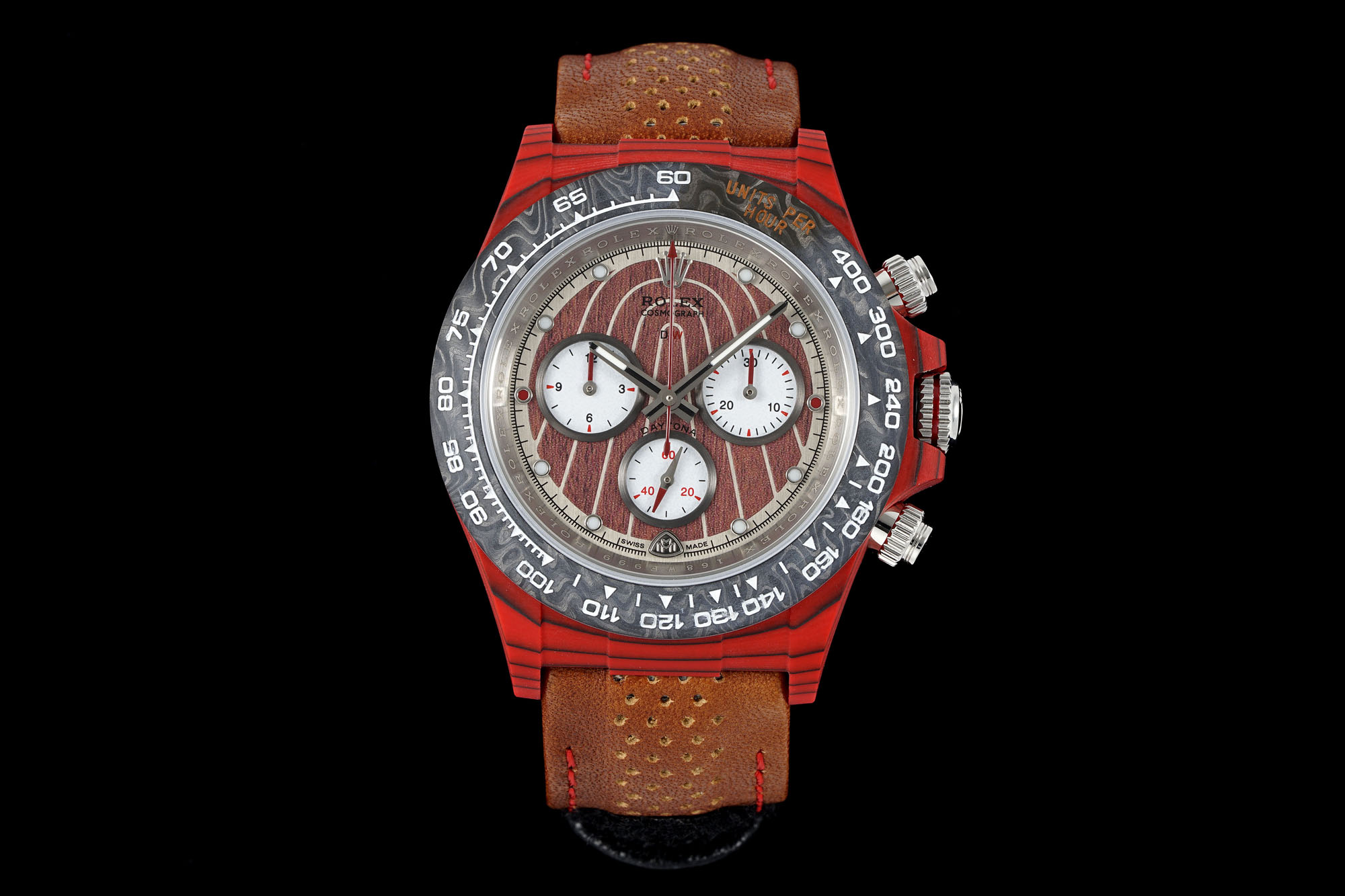
Replica listings read like code because they mix two languages: genuine model references, which have fixed meanings, and invented batch labels, which have none. A listing that says '116610, Clean v3, latest batch, AAA' is one real reference wrapped in three layers of marketing. Learning to separate the layers is the single most useful skill for reading these listings—and the checklist below does exactly that.
Layer one: genuine references with fixed meanings
Brands identify their models with reference numbers that mean something specific. Rolex uses short references—116610 identified the Submariner Date of the 2010s, and 126610 replaced it in 2020—while Omega references are longer and encode the collection, case, and movement, as on Seamaster and Speedmaster models. Cartier and Tissot do the same within their catalogs. A reference is checkable: it appears on the brand's own materials, in catalogs, and on the watch itself, and it describes a real model with real specifications. The Rolex brand section shows how references map to models on the genuine side.
Layer two: invented layers a reference cannot support
On top of a genuine reference, sellers add their own taxonomy. Version numbers—'v2,' 'v3,' 'v4'—claim that the seller's copies have improved over successive batches, with no record of what changed. Factory names claim workshop origin that cannot be checked. Batch words—'latest batch,' 'new dial,' 'fixed bezel'—claim recent corrections that no buyer can verify against a prior batch. None of these layers has a public definition, and none survives contact with the genuine reference: brands do not release 'v3' of a model, they change the reference number when the model changes. The layers are explained further in our terminology guide.
A useful test is to ask where the layers attach. Version and batch labels attach to the seller, not to the watch: they describe what the seller claims to have ordered or improved, and no engraving on the watch records them. The genuine reference, by contrast, is engraved on the watch itself. Anything in a listing that would not survive being found on the watch is language, not description.
The line-by-line decoding checklist
- Find the reference. Locate the genuine model number in the listing (for example, 116610 or a Seamaster reference) and look the model up on the brand's materials. That tells you what the watch claims to copy.
- Strip the version labels. Cross out every v-number and batch phrase. They describe the seller's internal story, not the watch.
- Quarantine the factory name. Treat names like Clean, VS, or Noob as tags for forum searches—see the factory comparison explainer—not as attributes of the watch.
- Test the movement claim. If the listing says 'Swiss' or 'clone 3135' or similar, ask what is physically inside and whether the seller will let a watchmaker confirm it. A claim the seller will not let you verify is decoration.
- Compare against the genuine model. Put photos of the listing next to photos of the real reference. The more the seller's copy relies on batch words, the less the photos of the actual watch are doing the selling.
- Check what the grade adds. If AAA appears, remove it too; grading claims are covered in our page on replica watch grading claims. After steps one through six, what remains is a genuine reference number and a seller's photographs—the only two things in the listing with any information content.
Why batches get mentioned at all
Batch language solves a specific seller problem: it turns repetition into progress. A seller who lists the same watch for months needs a reason for the listing to stay current, and 'latest batch' supplies one without committing to any specific change. It also answers the buyer's most natural question—'is this one better than the last one?'—with an unverifiable yes. Buyers who ask what changed between v2 and v3 rarely receive an answer more specific than 'improvements.' That asymmetry is the whole point of the language, and the checklist above is designed to strip it away. The sixth step exists for this reason: after the invented layers are removed, the seller is left with a reference number and photographs, and those are the only two elements a buyer can actually verify. Read the reference, judge the photos, and let the invented layers fall off on their own.
Frequently asked questions
Do v2 and v3 have fixed definitions?
No. The numbers exist only in seller listings and forum posts, and no two sellers define them the same way. Nothing public records what changed between versions.
Is a higher version number a better watch?
There is no way to know, because the versions are not audited. The number is a sales device, not a spec sheet.
Do genuine brands use batch or version names?
No. When a genuine model changes, the brand issues a new reference number and documents the differences. 'Batch' language belongs to informal selling only.
What does a factory name next to a reference add?
Nothing verifiable. It is a forum tag aimed at buyers who search by factory name; the reference remains the only part of the label with a public meaning.
Этот контент предназначен для общего часового образования. Он не подтверждает подлинность отдельных изделий и не гарантирует их аутентичность, а также не связан со сторонними брендами или фабриками.
