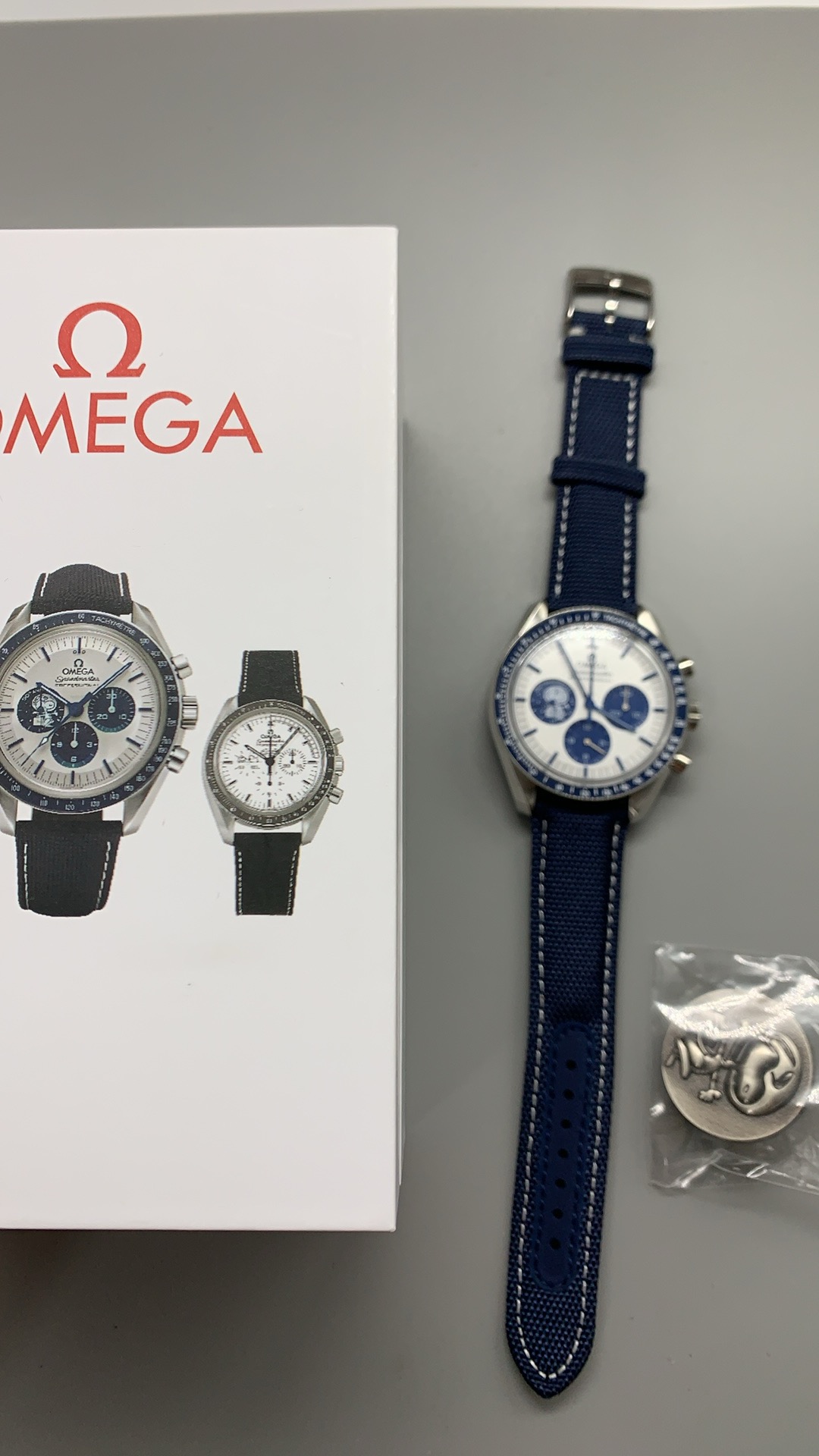
Treat any claim that a VS factory watch "accepts genuine parts" as unverified until a watchmaker proves it on the actual watch. Official channels will not supply or fit genuine parts to non-genuine watches, so the realistic question is compatibility with aftermarket and donor parts. Compatibility is testable — dimensions, threads, and fitting are physical facts. The label is not. Here is the checklist that separates the two.
The three parts channels
Genuine parts are distributed through each brand's authorized network, and brands fit them to genuine watches. A genuine crown or bezel insert is not sold through a replica listing, whatever the listing says. Aftermarket parts are made by third parties — some are model-specific, most are generic — and quality varies widely. A well-made aftermarket crystal or gasket set can be functionally identical to the branded part it copies; a badly made one fails faster. The variance is exactly why "compatible" means nothing until dimensions are checked. Donor parts come off other watches, genuine or not, and carry their own wear. Understanding what your watch's parts are made of starts with the case materials comparison.
A compatibility checklist
- Name the part precisely. Bezel insert, crystal, crown, tube, gasket set, bracelet, movement — "compatible with genuine parts" without naming a part is noise.
- Get the dimension the claim depends on. Crystal diameter and thickness, crown tube thread, bezel insert inner and outer diameter, lug width for straps. Compatibility is a set of measurements, and a seller who cannot produce them has not checked.
- Ask for the genuine part number. A claim like "fits Submariner bezel insert" can be compared against published specifications. A claim with no part number cannot be checked at all.
- Require fitted photos. Stock images prove nothing. The part must be shown on the actual watch, from the angle where the fit shows.
- Verify the crown thread. The most common parts claim — "genuine crown fits" — fails on thread mismatch, and a watchmaker can check it in minutes.
- Test-fit before paying. Where the seller is local, have the part fitted on the bench before money changes hands. Where it is not, no amount of written assurance substitutes for the test.
- Assume aftermarket. The safe default is that any part you buy for a non-genuine watch is generic, regardless of what the listing claims. Claims of the sort sellers make here are grading claims, not engineering specifications.
The parts most likely to be claimed, and their checks
Bezel inserts: compare inner and outer diameter plus thickness; inserts are press-fit, and fractions of a millimeter decide the fit. Crystals: diameter, thickness, and edge profile — a crystal that fits the opening but sits proud of the case is wrong regardless of diameter. Crowns and tubes: the thread is everything; a crown that threads but does not seat against the case lets water past the gasket. Bracelets: lug width first, then end-link curvature against the case profile. Each of these is measurable, which means each claim is checkable — the only excuse for accepting one on faith is convenience.
What official centers will and won't do
Official centers fit genuine parts to genuine watches, full stop. For a non-genuine watch they decline the job, and no label — VS or any other in the factory guides — changes that. The policy is about the watch, and it is uniform. Independent watchmakers, by contrast, fit aftermarket and donor parts every day; their caveat is that they cannot brand the result genuine.
When compatibility claims collapse
Most compatibility claims die in one of three places: the dimension is off by less than a millimeter, the thread pitch is wrong, or the part fits but the gasket does not compress correctly. All three are invisible in photos and instantly visible on the bench — which is the whole argument for test-fitting anything that costs real money.
Why this matters in practice
A watch is only as serviceable as its parts supply. A piece that needs a crystal or a crown but has no compatible parts path becomes a paperweight the day the part fails. Checking compatibility before buying is cheaper than discovering the problem after. Basic upkeep that stretches any watch's life is covered in the mechanical watch care checklist, and the most common parts questions live in the FAQ.
Frequently asked questions
Can I buy genuine brand parts directly?
Genuine parts are distributed through each brand's authorized network and are not sold for use in non-genuine watches. Retail availability to the public is limited by design.
Are aftermarket crystals the same quality as genuine?
They vary widely. Some aftermarket crystals are excellent; others are soft or poorly coated. Material and dimensions can be checked, and that check is the whole point of the compatibility list.
Will any bracelet fit any watch of the same lug width?
Not necessarily. Lug width is only one dimension; end-link shape and curvature decide the real fit. Bracelets are test-fit items, not mail-order certainties.
Should a watchmaker test-fit parts before I pay?
Yes, whenever it is possible. A bench fit is the only verification a compatibility claim can ever receive, and it takes minutes for parts like crowns and crystals.
Этот контент предназначен для общего часового образования. Он не подтверждает подлинность отдельных изделий и не гарантирует их аутентичность, а также не связан со сторонними брендами или фабриками.