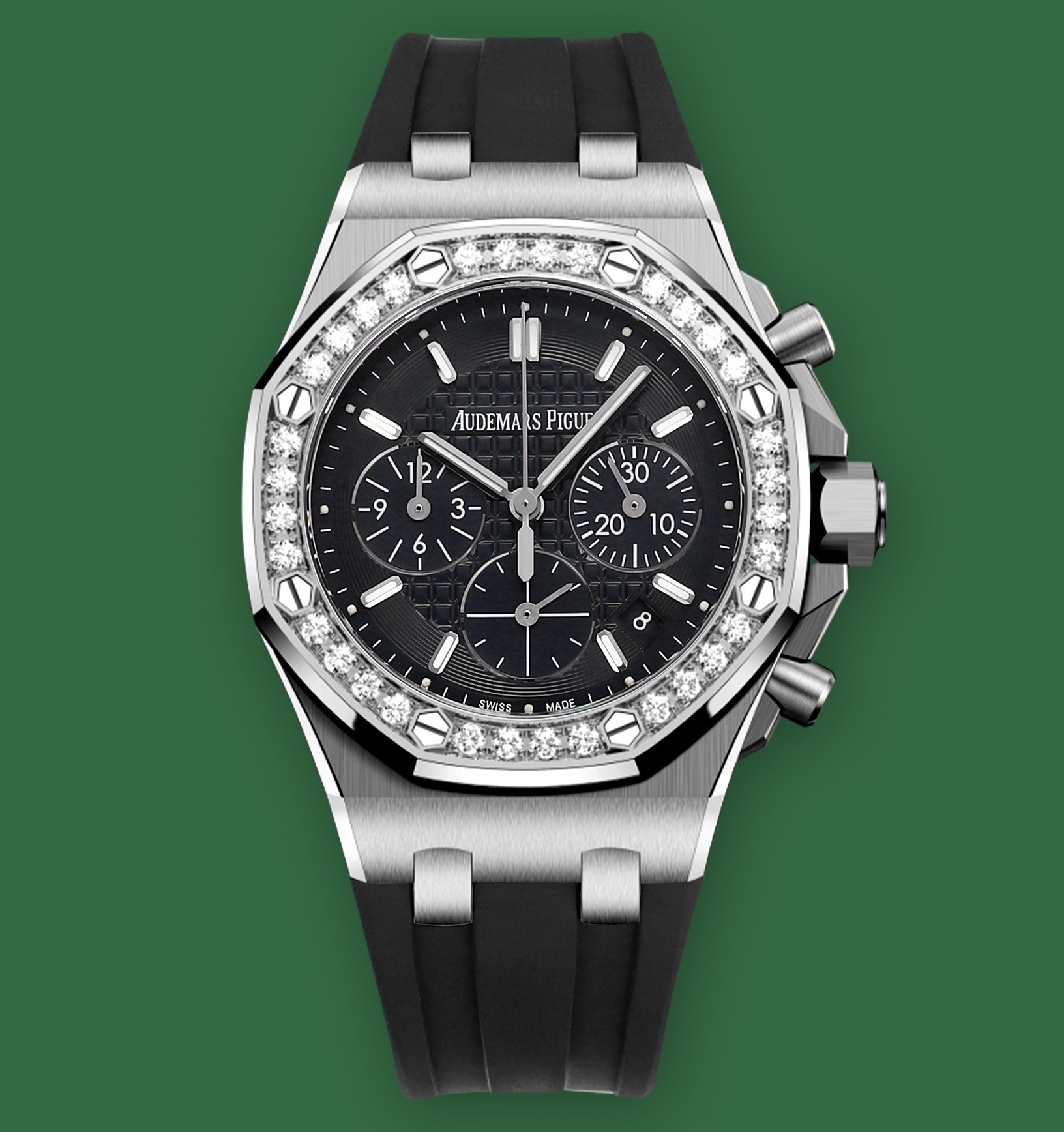
The material claims attached to NOOB factory listings — "904L steel," "sapphire crystal with AR," "ceramic bezel" — come from the specification sheet of the genuine Rolex being imitated. Whether the specific watch in the listing uses those materials is a different question that photos cannot answer. 904L and 316L steel look identical, sapphire and mineral glass are indistinguishable from a distance, and "ceramic" can describe either a real ceramic insert or a coated aluminum one.
The claims, side by side
| Claimed material | Genuine context | How it is actually checked |
|---|---|---|
| 904L stainless steel | Rolex's case alloy since the 1980s, marketed as Oystersteel since 2018 | Only laboratory or XRF testing; visually and by weight effectively identical to 316L |
| Sapphire crystal | Standard on modern Rolex and Omega; Rolex adds a laser-etched coronet at 6 o'clock | Hardness (Mohs 9) versus mineral glass (about 5-6); a watchmaker can test the crystal type |
| Anti-reflective coating | Omega applies visible AR to both sides of many crystals; Rolex's is subtle | Inspect reflections under light; heavy blue-purple glare on a Rolex-style piece is wrong |
| Ceramic bezel insert | Rolex Cerachrom from 2005; steel Submariner from 2010; Omega ceramic on Planet Ocean | Scratch resistance and feel; some inserts sold as ceramic are coated aluminum |
| "Wrapped" or plated gold | Genuine gold Rolex is solid 18K, hallmark-stamped | Plating wears at edges over time; solid gold is confirmed by hallmark and testing |
Why the steel claim is the hardest to verify
The 904L claim sits at the top of NOOB listings because Rolex's use of the alloy is famous. Rolex adopted 904L — a stainless alloy with more nickel, chromium and molybdenum than the industry-standard 316L — during the 1980s and now uses it for all steel cases, marketing it as Oystersteel since 2018. The practical differences are real but narrow: 904L is harder to machine and resists certain corrosion better, while the two alloys look and weigh essentially the same on the wrist. That is why the claim is unfalsifiable from photos: without laboratory equipment, even an experienced collector cannot tell them apart, and the difference does not identify a maker anyway.
Crystal and bezel: what you can check in hand
Crystal and bezel claims are more testable once the watch arrives. Sapphire scratches at Mohs 9, while mineral glass scratches at roughly 5 to 6, so a careful scratch test on a non-visible spot or a watchmaker's hardness check settles the crystal question. The laser-etched coronet at six o'clock, a genuine Rolex feature since the early 2000s, is frequently imitated, so treat it as one comparison point rather than proof. Ceramic bezel inserts resist scratching in a way aluminum never did, and a tap or weight check can distinguish them — ceramic feels cooler and denser than aluminum, though the difference takes practice to read — but note that neither result says anything about the workshop. The broader method is in our identification guide.
What the claims leave out
A material list also omits the properties that separate a genuine sports watch from a copy in daily wear: case sharpness and brushing, bracelet link tolerances and clasp feel, and the weight distribution on the wrist. None of these appears in a material claim, and all of them are visible and feelable once the watch is in hand. This is why the material list is best treated as the beginning of an inspection rather than the end: the claims name what the genuine watch is made of, while the qualities that make it feel genuine are exactly the ones no listing can paste from a spec sheet.
Treating the claims as descriptions, not evidence
The honest reading of any material claim in these listings is "this is what the genuine watch uses." The genuine Submariner uses Oystersteel, sapphire and Cerachrom; a listing that repeats those three words is describing the original, not reporting a test of the copy. Confirm what matters after receipt — crystal type, plating, bezel material — and remember that even a copy using every material on the genuine sheet is still an unauthorized copy. For the materials themselves, start with our case materials comparison; for the label, the NOOB factory guide; and for the genuine reference points, the Rolex brand page.
Frequently asked questions
Can I tell 904L from 316L by eye or weight?
No. The alloys are visually indistinguishable and nearly identical in density. Genuine 904L can only be confirmed by laboratory testing.
Are replica ceramic bezels really ceramic?
Some are, some are coated aluminum or composite. The claim cannot be verified from listing photos, and ceramic does not identify the maker.
What is the laser-etched crown on Rolex crystals?
A small coronet etched into the sapphire at six o'clock, used since the early 2000s. Copies imitate it, so treat it as one comparison point among many, not as proof.
Why do some Rolex-style replicas show a bluish crystal edge?
Anti-reflective coatings refract light into blue or purple tones. On a Rolex-style watch this usually means the crystal treatment does not match genuine Rolex, which keeps AR subtle.
Does Oystersteel mean a different alloy?
It is Rolex's marketing name, used since 2018, for its 904L stainless steel. The alloy itself is not new; the name is.
Este conteúdo é para educação geral sobre relógios. Ele não verifica nenhum produto específico nem garante autenticidade, e não tem vínculo com marcas ou fábricas de terceiros.