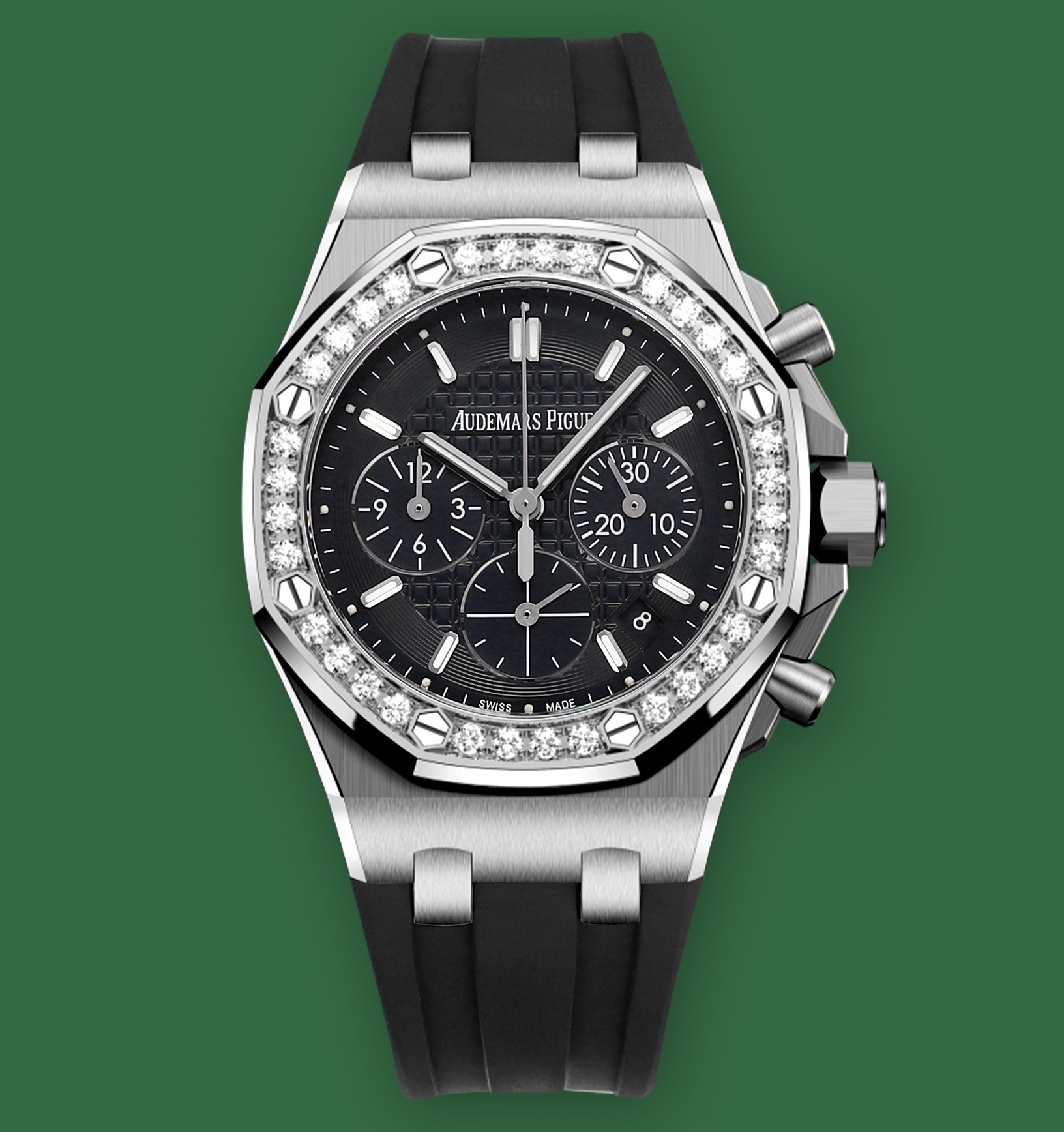
Rolex builds cases from its own 904L steel, branded Oystersteel, and fits ceramic bezels and sapphire crystals on its sports models; OMEGA and Cartier publish their materials per model as well. A NOOB listing can use the same words, 904L, ceramic, sapphire, 18k, without any of the underlying verification. The gap between the official spec and the listing claim is not vocabulary; it is testing. Here is what each term means and how to check it.
What do the official material specs actually say?
Rolex specifies 904L stainless steel for its steel cases, an austenitic alloy with high corrosion resistance that Rolex calls Oystersteel, plus 18k gold alloys including its Everose pink gold. Cerachrom is Rolex's name for its ceramic bezel inserts, used on the Submariner, GMT-Master II and Daytona among others, and Rolex uses sapphire for crystals, with a Cyclops magnifier over the date on models that carry one. OMEGA uses steel, titanium on selected Seamaster models, ceramic bezels and dials on the Diver 300M, and sapphire almost everywhere except the classic Speedmaster Professional, whose hesalite crystal is a deliberate historical choice. Cartier uses steel, gold and platinum with sapphire crystals across the current catalog.
Does the word "904L" in a listing mean the case is 904L?
No. It means the seller typed four characters. There is no certificate in a marketplace listing, and 904L is invisible: it looks like any other polished steel, and it is not meaningfully magnetic either way, so neither the buyer nor the seller can tell the alloy apart from 316L without laboratory testing. The NOOB label, like every factory nickname, is forum shorthand for an unauthorized producer with no official standing. The alloy claim became a selling point because Rolex uses it, which is precisely why unauthorized sellers repeat it. Treat it as unverifiable in any listing context.
How do you check a ceramic bezel claim?
Ceramic and aluminum behave differently under touch and light. Ceramic inserts are glossy, hard and cool to the touch; aluminum inserts are softer, more matte, and scratch more easily. Ceramic can crack where aluminum dents, so a chip at the insert edge is telling. The check that matters most is against the model: if the reference ships with a ceramic insert and the listing shows a dull, soft-looking one, or the reverse, the claim and the visual disagree. Under a loupe, the markings on a genuine ceramic insert are crisp, while painted aluminum shows softer edges.
What about the crystal?
Sapphire and mineral glass differ in hardness, and the test is simple: sapphire resists scratching from steel, mineral does not. A jeweler's tester or a careful test on an inconspicuous edge settles it in seconds. On a Rolex date model, the Cyclops should magnify the date roughly two and a half times and sit directly over the aperture, so both position and magnification are worth checking. Anti-reflective coating is another detail: where a brand uses AR, it sits on the underside of the crystal and reads as a subtle tint at an angle, while a coating on the outside that smears or scratches points to aftermarket treatment.
And gold cases?
A gold claim is the easiest to verify without tools, because gold is dense. An 18k gold watch weighs substantially more than the steel equivalent, and the caseback should carry the millesimal fineness stamp, 750, plus the assay hallmark. A gold-colored watch at steel weight is plated or wrapped. Plating wears first at the lugs and caseback edge, so close photos of those zones settle most gold claims.
What the claim-versus-spec gap costs you
Material claims are where the difference between official and listed becomes money. A steel case, a sapphire crystal and a ceramic insert each cost more to produce than their cheaper substitutes, which is why they are claimed. When the claim is unverifiable, price it as the cheapest possibility: if you are not certain the bezel is ceramic, assume aluminum; if the crystal has not been tested, assume mineral. Official retail removes that uncertainty by specification and by law; a NOOB listing removes it only by assertion.
Where claims and specs finally diverge
Official specs describe a watch the brand made and stands behind; a listing describes a watch a seller hopes you will believe in. The material words match, which is the whole problem. To weigh the two against each other, see our case materials comparison, then cross-check the Rolex page and the VS versus NOOB factory comparison to understand how sellers position these claims.
Frequently asked questions
Can a magnet test tell 904L from 316L steel?
No. Both are austenitic stainless steels and behave essentially the same around a magnet, which is one reason the 904L claim is so hard to verify outside a laboratory.
Is hesalite better or worse than sapphire?
Neither. Hesalite is a plastic crystal that scratches easily but resists shattering, which is why the classic Speedmaster Professional kept it. Sapphire is harder and scratch resistant. Each has a trade-off.
Do ceramic bezels scratch?
Rarely. Ceramic is extremely hard and keeps its gloss, but it can chip or crack under impact where aluminum would dent.
How much heavier is a gold watch?
Noticeably. 18k gold is roughly half again as dense as steel, so the same case shape in gold weighs significantly more in the hand.
Este conteúdo é para educação geral sobre relógios. Ele não verifica nenhum produto específico nem garante autenticidade, e não tem vínculo com marcas ou fábricas de terceiros.