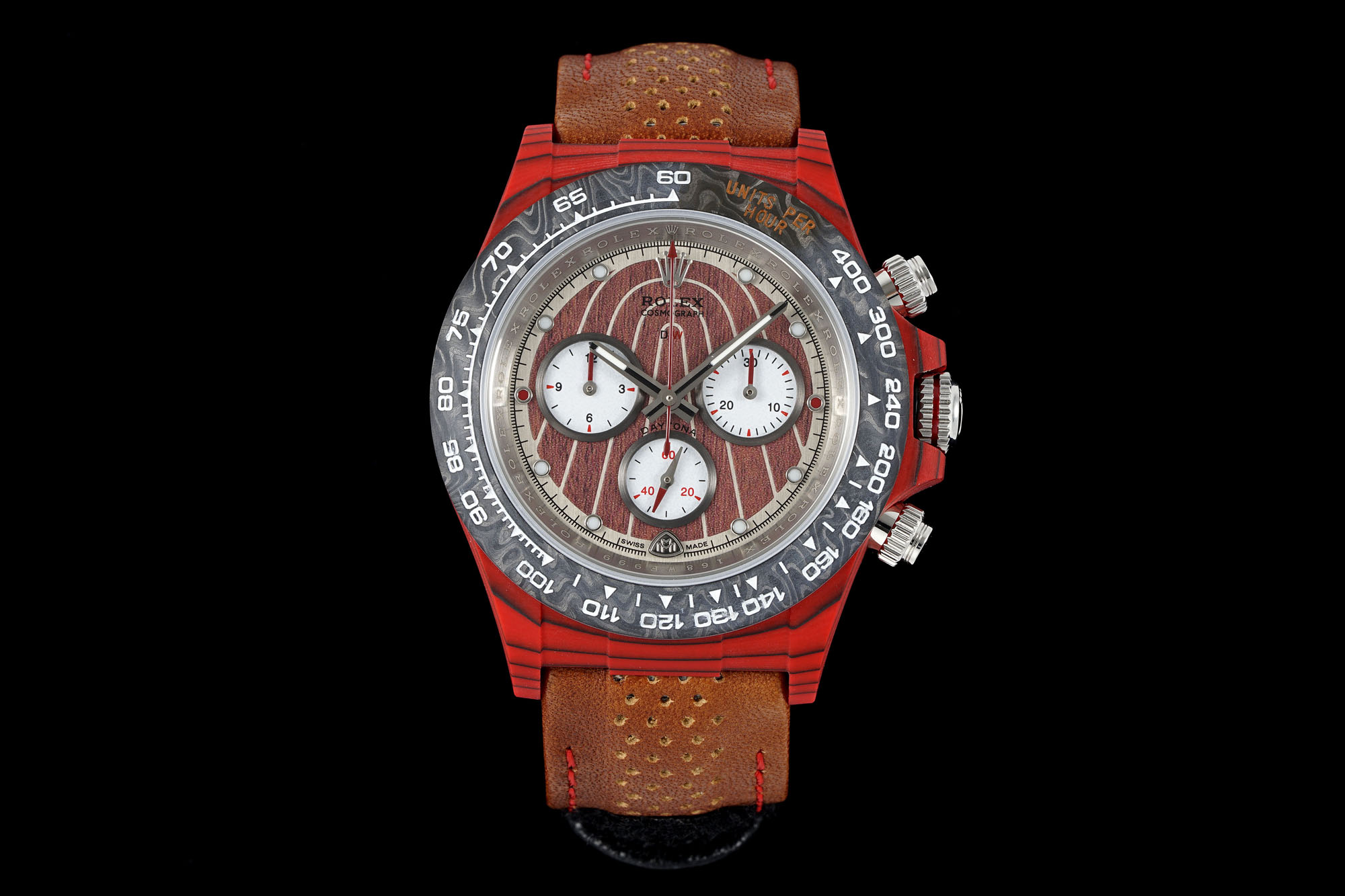
The short answer: water-resistance and sealing claims vary because no shared testing standard exists behind the "VS factory" label. On a genuine watch, a depth rating comes from a standardized test performed with new gaskets at the factory. On a forum-labeled watch, the same printed claim is usually seller copy, attached to products from different batches with different seals and different assembly care.
What a depth rating means on a genuine watch
Genuine watches are rated under standards such as ISO 22810, which classifies water resistance in pressure terms: 30 meters means splash and rain resistance, 50 to 100 meters covers swimming and snorkeling, and 200 meters plus is the territory of serious diving. Diving watches follow the stricter ISO 6425, which requires testing at an overpressure of 125 percent of the rated depth. The full scale, and what each band allows in practice, is explained in our guide to watch water resistance ratings.
Why the same label produces different claims
Even within a single genuine model, water resistance is a property of the seals as much as the case. In watches sold under a shared forum label, four things push claims apart:
- There is no factory-wide quality gate, so gasket quality and installation care vary between batches.
- Sellers attach the same label to different underlying products, each with its own assembly source.
- "VS" and "VSF" are used interchangeably in some listings and as distinct names in others, blurring which product a claim describes.
- Depth numbers are easy to print and hard for a buyer to test, which makes them attractive copy.
The terminology problem is covered in our VS, Noob and Clean terminology guide and the dedicated VS factory guide.
Does "tested to 300m" mean tested?
In a genuine watch, yes, within the limits of the standard and the condition of the seals at the time of testing. In a forum listing, the word is normally decoration: there is no certificate, no test report and no way to confirm the wording. Even a genuine watch with a 300-meter rating only holds that rating while its gaskets are intact and its crown is properly seated, which is why the rating is a starting point rather than a permanent state.
Where sealing variance enters
Water resistance depends on several consumable parts working together: the caseback gasket, the crystal gasket, the gaskets inside the crown and its tube, and, on models that have them, the pusher and helium-valve seals. Any one of these, made from the wrong material, cut poorly or installed pinched, turns a case that looks sealed into one that leaks. Genuine brands replace gaskets at every service for exactly this reason.
How pressure testing actually works
A dry pressure test places the sealed watch in a chamber and measures how the case deforms under pressure. If the case compresses and recovers as a solid unit, the seals are holding; if the crystal or caseback gives unevenly, air or water is finding a path. The test takes minutes, costs little, and is the only check that speaks to the seal condition of a specific watch rather than the rating printed on its dial. That is why a tested rating on paper and a tested seal on the wrist are different things.
Seals age, and nobody knows by how much
Gaskets degrade from use, ozone, skin chemistry and the repeated threading of the crown. A crown that seals today may not seal next year, and on a watch with no service history there is no record of when any seal was last replaced. That is the second reason claims vary even between watches that started identical: the claim on the page says nothing about the age and condition of the seals in the case. Our mechanical watch care checklist covers how routine service keeps sealing honest.
A workable rule for unverified claims
Until a local watchmaker pressure tests a watch with a dry tester, treat any forum-labeled watch as splash-resistant only, regardless of what the dial or the listing prints. If water exposure matters to you, have the test performed when the watch arrives and roughly once a year after that. The claim on the page costs nothing; the test costs little and actually tells you something.
Frequently asked questions
What do the meters on a dial actually mean?
They are pressure classes, not diving depths. Thirty meters means splash and rain resistance, 50 to 100 meters covers swimming, and 200 meters plus is diving territory under standards such as ISO 22810 and ISO 6425.
Is a 300m claim in a VS factory listing meaningful?
Not by itself. On a genuine watch the rating is a standardized test result; in a forum listing it is unverified seller copy with no test report behind it.
How often should gaskets be replaced?
Gaskets are consumables replaced whenever the case is opened and at every full service, which for most watches means every few years. A watch with unknown service history should be assumed to have unknown seals.
Can I test water resistance myself?
Only roughly. A cup of water proves nothing about how the seals behave under pressure. A proper dry pressure test requires a watchmaker's testing machine.
Does screwing the crown down guarantee sealing?
No. A screw-down crown engages the crown gaskets, but a worn, pinched or perished gasket still leaks. Seating the crown is necessary, not sufficient.
본 콘텐츠는 일반적인 시계 교육용입니다. 개별 제품을 검증하거나 정품임을 보증하지 않으며, 제3자 브랜드나 공장과 무관합니다.