
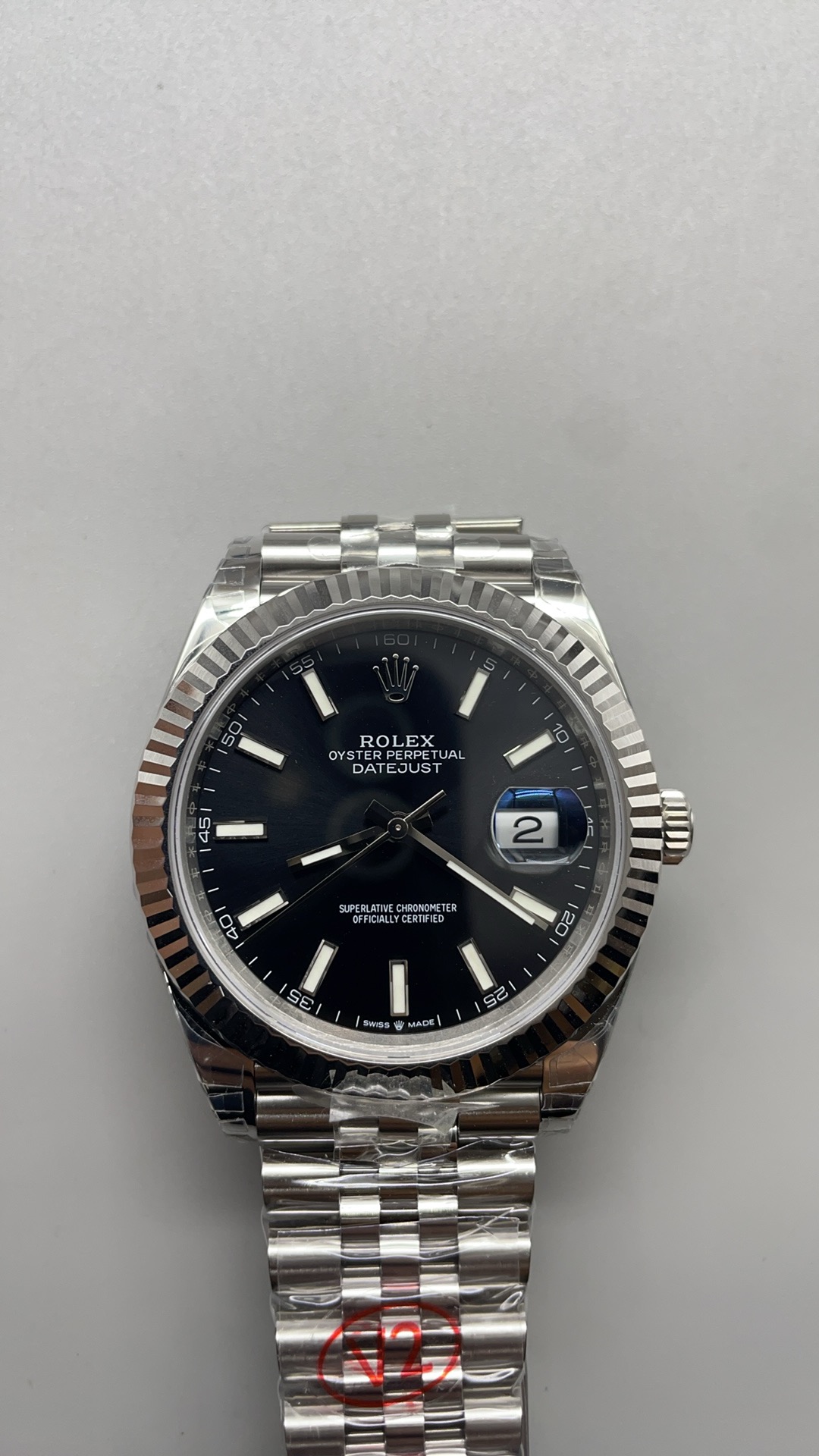
Misrepresentation in resale is mostly about disclosure: what the seller states, what they leave out, and where the caveats sit. A BV factory watch presented as "pre-owned genuine" is counterfeit misrepresentation; the same watch described honestly would state its origin plainly. The scenarios below are the common listing patterns, with the risk each carries and what a careful buyer can do.
Scenario 1: "Pre-owned Rolex, no box, no papers"
This is one of the most common secondhand formats, and it exists for genuine watches too — a bare watch is not itself proof of anything. The problem is that the missing documents raise the burden on everything else. Ask for clear photographs of the serial and reference on the case, photographs of the movement, and an explanation of the price if it sits far below market. A seller who declines all of these while holding a "Rolex" is declining the cheapest form of verification there is. Our Rolex guides explain what reference numbers and era details look like on real models.
Scenario 2: The openly disclosed "custom build"
Some listings describe watches assembled from mixed parts — genuine cases with aftermarket dials, repainted dials, swapped hands, replacement movements. When a seller states this plainly, it is disclosure; the buyer knows the watch is a franken, and franken watches have their own collecting niche. The risk is the unstated version: the same mixed-parts watch described as all original. If a listing says "fully original" but cannot show movement photos or provenance, treat the claim as unverified. The difference between the two listings is a sentence — which is the whole measure of disclosure.
Scenario 3: "Inspired by" on a listing with the brand name on the dial
"Inspired by" belongs to homage vocabulary: an unbranded watch that borrows a famous design without copying protected marks. A watch whose dial carries the brand's name and logo is not "inspired by" anything — the mark itself is on the goods. When both the tribute language and the trademark appear in the same listing, the language is there to soften what the photos show, and that combination deserves to be read exactly as it looks. This is a core pattern in counterfeit identification.
Scenario 4: The "we cannot guarantee authenticity" disclaimer
The disclaimer is the disclosure. A seller who writes that they cannot guarantee authenticity is telling the buyer, in so many words, that they will not stand behind the watch's origin. It is the strongest statement in the listing, and it should never be treated as fine print. Where a seller does guarantee authenticity, the meaningful question is what the guarantee covers and who honors it — a promise from an anonymous account is not a mechanism. Read the disclaimers first, because that is where the seller's real position lives.
Scenario 5: "Open card" and "stamped papers"
An open card is a warranty card left blank, sometimes presented as a benefit because the buyer can "fill in their own name." A blank card proves nothing about the watch. Likewise, a card stamped by an unknown third party is just a stamped card; the warranty value of genuine papers comes from the authorized dealer and the brand behind them. These documents exist in genuine resale, which is precisely why sellers of counterfeits imitate them — and why the papers have to be checked against the watch, not admired on their own.
What honest disclosure looks like
Legitimate pre-owned listings tend to share the same materials, because sellers who can stand behind a watch want to show their work:
- A plain statement of what the watch is, including aftermarket parts if any.
- Readable photographs of serial, reference, and case back.
- Movement photographs or a recent service receipt.
- A seller identity that can be contacted, with a return policy stated before purchase.
The absence of these items does not prove a counterfeit, and their presence does not prove a genuine watch — documents are imitated too. What the comparison shows is disclosure effort, which is what the scenarios above are really measuring.
Where misrepresentation surfaces later
Resale misrepresentation often only becomes visible at the next step in the chain: a buyer lists the watch again and an informed reader spots the reference mismatch; a service center opens the case and finds the movement does not belong to the model; a platform authenticator flags the listing. By that point the original seller is often gone. That sequencing is why the checks above happen before payment rather than after, and why the safest role for a resold watch is one where its origin can still be documented.
The seller-side tell
Disclosure failures usually announce themselves in the seller's answers, not just the listing. Ask what the watch's origin is, whether any parts were replaced, and whether the papers belong to this specific case. A seller who answers plainly is doing disclosure work even in chat; a seller who answers with marketing — "top quality, you will love it" — is declining the same work in writing. Keep the chat record; it matters later if anything goes wrong.
A short decision guide
Before paying, run the listing through three questions:
- Does the listing say what the watch is, or only what it resembles?
- Do the papers, serial, and reference all agree with each other and with the watch in the photos?
- Would the seller welcome an inspection by an authorized service center?
A "no" on the first or third question, or a mismatch on the second, is a reason to stop. The BV factory guide explains how these watches circulate in the first place, and the FAQ answers the resale questions that follow a near miss.
Frequently asked questions
Is "no box, no papers" itself a red flag?
Not by itself — many genuine pre-owned watches are sold that way. It raises the importance of other checks because the usual documentation is missing.
What does "open card" mean in a listing?
A warranty card left blank, which a seller may present as ready to be stamped. A blank card proves nothing about the watch's origin or authenticity.
If a seller writes "we cannot guarantee authenticity," is that disclosure?
Technically yes — it is an admission the seller will not stand behind the origin. Treat it as the strongest warning in the listing, not as fine print to skip.
Are frankens always misrepresented?
No — a watch openly described as a mix of genuine and aftermarket parts is disclosed. The misrepresentation happens when mixed parts are sold as fully original.
본 콘텐츠는 일반적인 시계 교육용입니다. 개별 제품을 검증하거나 정품임을 보증하지 않으며, 제3자 브랜드나 공장과 무관합니다.
