
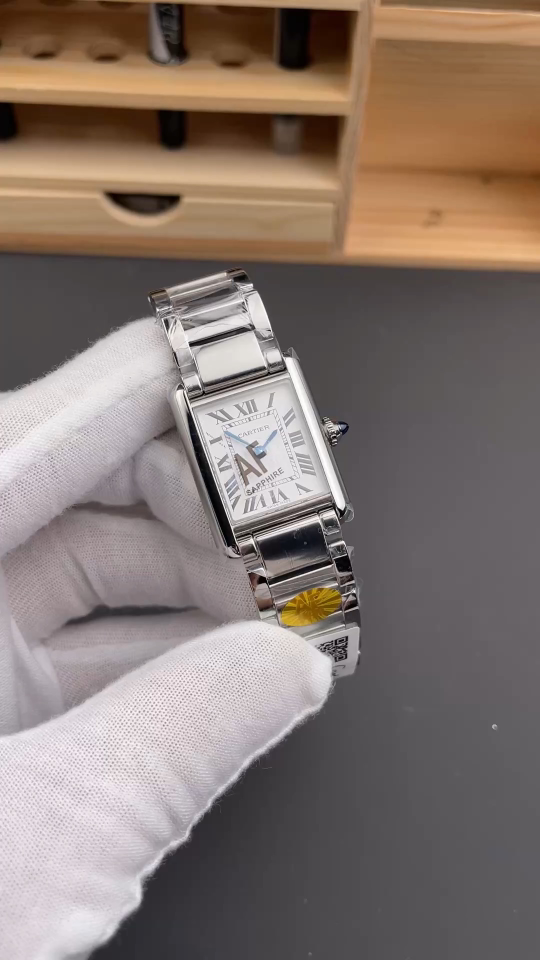
Documents are the weakest link in watch authentication. A warranty card, box, or receipt proves something only when the serial on the paper matches the serial on the watch and the issuing retailer or brand can confirm the record. Blank, undated, or mismatched paperwork is common on unauthorized copies — including those sold under a 'VS factory' label.
What the papers are supposed to do
A warranty card does one real job: it records that a watch with a specific serial was sold on a specific date, and it starts the coverage clock. The major brands operate published warranty terms — Rolex has offered a five-year international warranty since 2015, Omega offers five years, and Cartier extends coverage up to eight years for registered watches through its Cartier Care program. A card that cannot be matched to such a system is a piece of cardboard, and for an unauthorized copy there is no system for it to match.
What each document can and cannot prove
| Document | What it can prove, if verifiable | What it cannot prove |
|---|---|---|
| Warranty card | That a watch with that serial was sold through a retailer | That the watch in your hand is that watch |
| Sales receipt | The transaction and the seller's record of it | The item's origin beyond the seller's word |
| Service papers | That work was performed on a watch with that serial | That the case and movement belong together |
| Box and hang tags | Essentially nothing | The authenticity of anything |
Every row runs through the same gate: the serial must match the watch, and someone independent of the seller must be able to confirm the record.
Red flags in the paperwork
Certain patterns recur on listings that carry replica-market names:
- a blank or undated warranty card, leaving the sale date unproven
- a serial on the card that does not match the serial on the watch
- a card from a retailer that cannot be confirmed to exist
- misspellings, uneven printing, or fonts that differ across the set
- the seller's explanation that papers were 'held back' for customs reasons
- a photographed 'full set' that never actually arrives with the watch
Checking documents against the brand
For a genuine watch, the documents have a back end. A Rolex or Omega card can be checked against the brand's system through a retailer or service center, which can confirm the serial, the model, and in many cases the service history. That confirmation is the whole value of paperwork: it converts the seller's story into a record a third party can read. The check works in the other direction too. If a card cannot be confirmed — wrong format, unregistered serial, a retailer that has never heard of the sale — the card is doing negative work. A watch accompanied by unconfirmable papers is worse documented than a watch accompanied by none, because the papers create the appearance of verification that fails the moment anyone actually verifies. That asymmetry is worth keeping in mind at every step: genuine papers welcome verification, while replica-market papers depend on no one trying.
The decision path
Work through the documents in order and stop where the chain breaks; each step either advances to the next or ends the exercise:
- Match the serial on the card, receipt, and watch. A mismatch ends the exercise.
- Confirm the issuing retailer exists and, for a genuine piece, ask the brand or an authorized service center to confirm the serial and service history.
- If the watch is offered without papers, price the purchase as papers add nothing — and remember that for a genuine watch, a service center can often issue fresh documentation after an inspection.
- For anything sold under a replica factory name, assume the papers are unverifiable until proven otherwise, because there is no authorized channel behind them to confirm.
None of this machinery is needed to value the papers themselves. A warranty card that verifies converts into real money at resale and real protection at the service counter; a card that does not verify converts into nothing. When a 'VS factory' listing prices a full set as if the papers were confirmable, it is asking you to pay for verification that, on inspection, cannot be performed.
Frequently asked questions
What is a 'full set'?
The watch together with its box, warranty card, hang tags, and receipts. It adds resale value and verification routes for a genuine watch — and neither for an unverifiable one.
Can warranty cards be faked?
Yes. Cards and boxes are printed materials and are widely reproduced, so a card proves nothing until a retailer or the brand confirms the serial.
Does an undated card still carry warranty?
Coverage runs from the date of sale, and an undated or unactivated card leaves that date unproven, which puts the start of coverage in question.
Can a service center verify a watch for me?
An authorized service center can confirm a genuine watch's serial and service history. For an unauthorized copy, no confirmation is available.
本コンテンツは一般的な時計教育を目的としています。個別の製品を検証したり真贋を保証したりするものではなく、第三者のブランドや工場とは一切関係ありません。