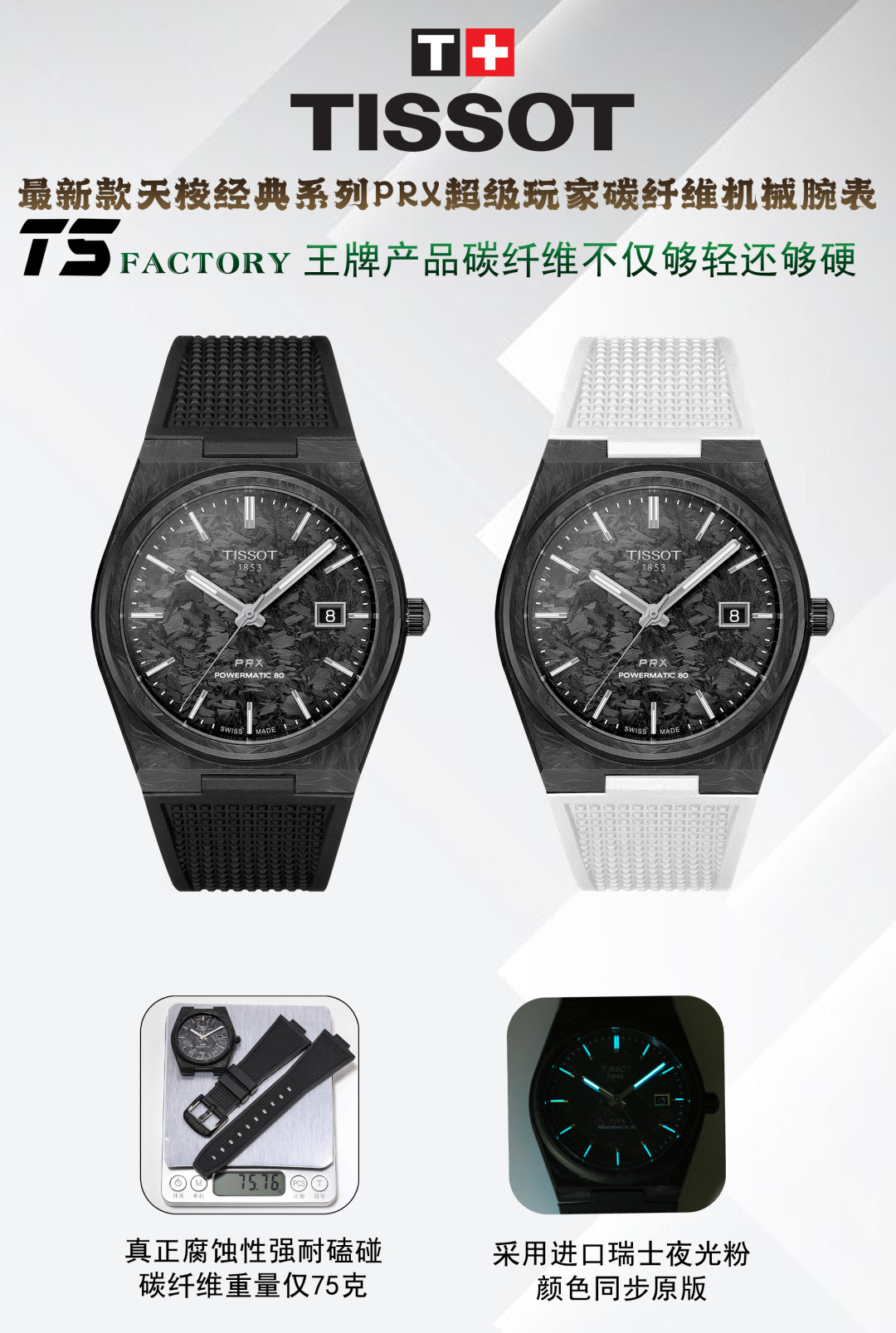
Official brand service centers will not fit genuine parts to a non-genuine watch, so any compatible-with-genuine-parts claim on an AAA-grade replica watches listing describes a hope, not a verified standard, and a seller who claims otherwise is describing a test-fit that no one performed. Nothing sold in this market is tested against brand tolerances, and most compatibility claims cannot be checked without a watchmaker and both parts in hand. Here is what the claims imply versus what can actually be verified.
Why genuine parts don't drop in
Genuine parts are made to the brand's own drawings and tolerances, and brand service fits them to genuine cases under workshop conditions. A non-genuine case is reverse-engineered from observation, not built to those drawings, so even a dimensionally close case can differ where it matters: thread pitch, gasket channels, bezel undercuts, and crystal seat height. Whether a genuine bezel or crystal fits any given non-genuine case is an empirical question answered only by test-fitting, which official centers will not do.
The claims versus the reality
| Listing claim | What it implies | What can actually be checked |
|---|---|---|
| Accepts genuine bezel and crystal | Case geometry matches the brand's dimensions | Only by test-fitting, which requires both parts and a watchmaker |
| Swiss-made gaskets and seals | The case holds a factory-level seal | Gaskets are generic parts; only a pressure test verifies the seal, and a listing cannot show one |
| Same case as the original | Dimensional cloning to genuine specs | External dimensions can be measured; internal geometry cannot be read from photos |
| Factory-tested to 30 m | The watch passed a water-resistance test | No test standard is named and no certificate is verifiable; treat as unverified |
| AAA-grade parts throughout | A quality level for components | The grade is marketing vocabulary with no specification behind it |
What a watchmaker can check for you
An independent watchmaker can answer the practical versions of these questions. They can pressure-test the case to confirm what the seals actually hold, tell you whether a genuine crown threads onto the tube, and identify the movement and its service needs. Our water resistance guide explains what a pressure test does and does not prove, and why a rating printed on a dial is never the same as a passing test on this particular watch.
The gasket and crown reality
Compatibility claims usually name glamorous parts, bezels and crystals, but the parts that determine daily durability are the cheap ones: gaskets, crowns, and tubes. A genuine crown threads onto a genuine tube at a defined pitch; a non-genuine case uses whatever pitch its maker cut, and the seller's claim that a genuine crown fits is another test-fit question nobody has performed. The same applies to gaskets, which are commodity rubber or silicone cut to a channel the brand never designed. This is why pressure testing, not parts branding, is the only compatibility check with daily meaning, and why claims about seals deserve more skepticism than any other line in a listing.
Where factory names fit in
Listings often attach factory names such as Clean, VS, Noob, BV, and AF to parts claims, as if the name certified the quality. It does not. Factory names are forum shorthand for particular workshops and their reputations, not audited manufacturers, and two sellers can use the same name for different stock. The factory guides and our pages on Clean and VS explain how these labels are actually used, and why a name is a starting point for reputation questions rather than a guarantee about parts. The name answers who by reputation; it never answers whether a genuine part fits, because only a bench and the part itself can.
The decision that follows
If a listing's value rests on genuine parts fitting the case, the claim is unverifiable at the point of purchase, which means you are paying for it on trust. The honest position is the watchmaker's: the case is what it is, the parts are what they are, and compatibility is established by test-fitting or not at all. Price the watch on what you can see and measure, and treat every compatibility claim as a question for later inspection rather than a feature you paid for. Ask the seller which of these checks was performed, by whom, and whether the check can be repeated after purchase; the usual silence is the answer.
Frequently asked questions
Will any authorized service center fit genuine parts to a replica case?
No. Official centers work on genuine product and will not use genuine parts on non-genuine watches, so genuine parts fitted is not something this market can actually deliver.
Can I test a genuine-crystal-fits claim myself?
Not without the genuine crystal and the tools to fit it. A watchmaker can test-fit if you own both parts; otherwise the claim stays unverified.
Do factory names guarantee parts quality?
No. Factory names signal a workshop's reputation among forum buyers, but they are not audited manufacturers and sellers misapply them. The name does not certify parts.
What is the most useful compatibility check before buying?
A pressure test after purchase. It verifies the one thing that matters most in daily wear, whether the case and seals hold, independent of any listing language.
本コンテンツは一般的な時計教育を目的としています。個別の製品を検証したり真贋を保証したりするものではなく、第三者のブランドや工場とは一切関係ありません。