
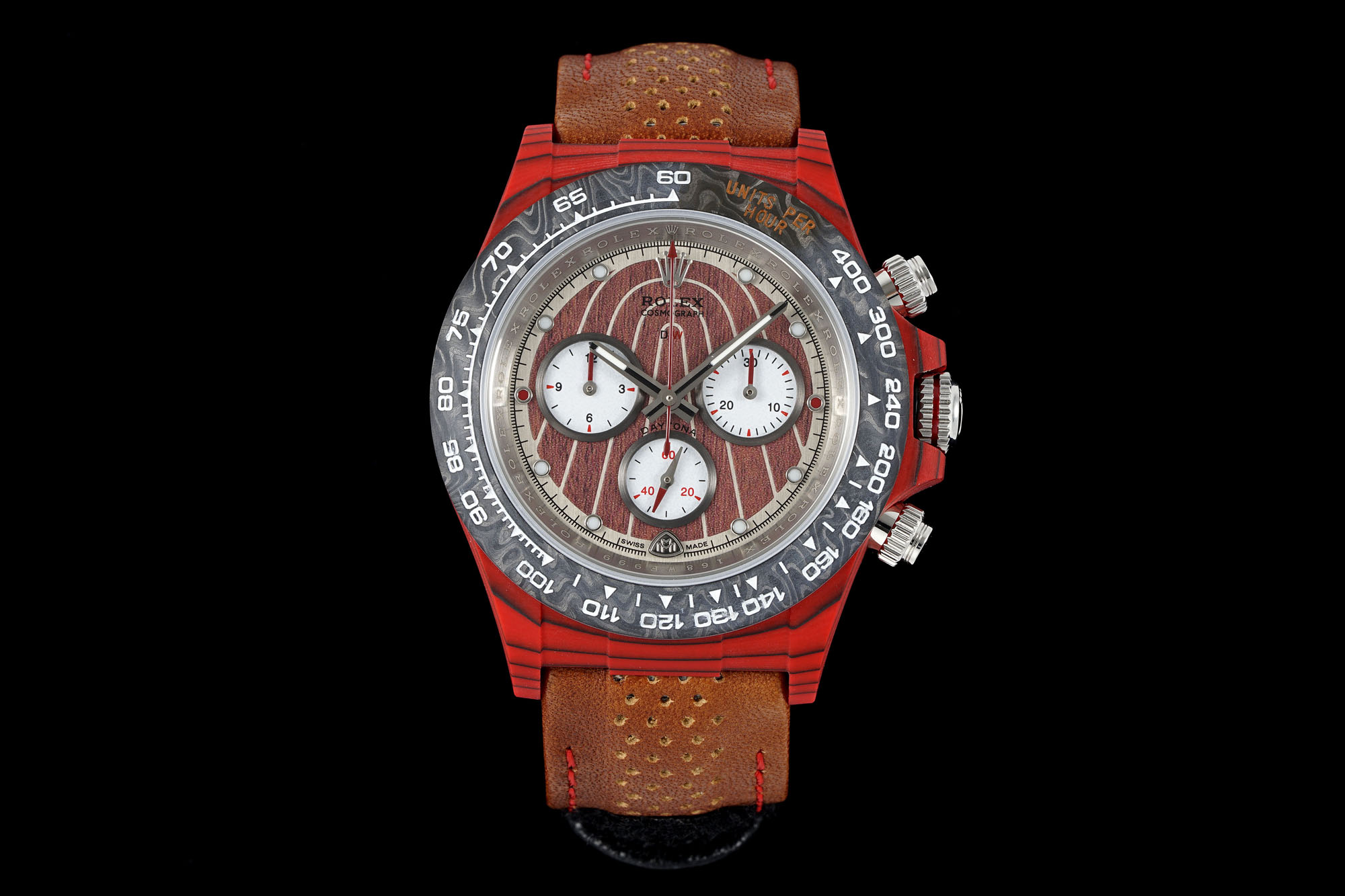
The movement in a watch sold under the NOOB factory label gets no official support from any brand service network, so servicing it means finding out what the movement actually is and locating an independent watchmaker willing to take the job. A decorated, brand-shaped calibre can look impressive and still be close to unserviceable in practice, while a watch built on a generic calibre can often be maintained like any other. The terminology below sorts one from the other.
The terms that decide everything
- Base calibre - the underlying movement a watch is built on, such as a Miyota, Seagull or ETA-family design.
- Clone movement - a movement built to imitate a specific brand calibre's layout and appearance without being that calibre.
- Decorated movement - a base calibre with cosmetic plates, engraving or colored screws added to resemble a finished brand movement.
- Service - the standard maintenance routine: disassembly, cleaning, lubrication, reassembly and timing adjustment.
Why the brand networks are closed
Authorized service centers work from brand technical documentation and a genuine parts supply, both reserved for genuine watches. A watch sold as NOOB factory has no serial record in any brand system and no entitlement to parts, so the limitation is administrative and legal, not just technical: even a fully competent technician inside an authorized center is not permitted to work on it. The label itself is explained in the NOOB factory guide, and the wider landscape of these labels is mapped in our factory guides.
Identify the movement before anything else
Most watches sold with this label run one of two things: a generic automatic calibre, or a generic calibre dressed up to look like a brand movement. Which one you have decides your options, and a watchmaker can tell you which it is in minutes from the engravings under the balance or on the main plate.
Generic calibres
If the watch runs a standard Miyota, Seagull or ETA-clone design, most independent watchmakers can service it like any other watch. Parts are available through normal wholesale channels, technicians recognize the movement on sight, and the service cost stays modest. Movement-level basics are covered in automatic vs quartz watch movements.
Decorated or brand-shaped calibres
A movement modified to imitate a Rolex or Audemars Piguet calibre is a different proposition. Cosmetic plates can hide the true base calibre and interfere with reassembly, and spare parts for the imitation elements generally do not exist in any catalog. When something breaks, repair options narrow to what a watchmaker can improvise, adapt or salvage from a donor watch, which is why many shops decline these jobs outright and why two shops can quote very different figures for the same piece.
What a movement service involves
Knowing the mechanics of a service helps when comparing quotes. A full service runs the same steps on any mechanical watch: the caseback comes off, the movement comes out, the hands and dial are removed, the movement is disassembled, every part is cleaned, fresh lubricants are applied at specified points, everything is reassembled, and the watch is regulated on a timing machine. Gaskets are normally replaced at the same time, which is the moment to have water resistance checked or simply declared as unknown.
Quartz is the exception
A portion of the watches sold with these labels are quartz, and for them the picture is much simpler: a battery change is cheap, widely available and within any competent shop's reach. If the quartz module itself fails, replacement modules are standard parts for common calibres, and the economic question is the same as for any inexpensive watch. A battery that dies inside the case and is left for months can leak, so check quartz watches periodically rather than leaving them dormant for years.
Cost logic: when servicing makes sense
The general rule for mechanical watches, a service every three to five years, still applies mechanically, but the economics differ. A full service costs the same labor as a genuine watch of similar complexity, so the practical question is how the quote compares with the price of a complete replacement, shipping included. For an inexpensive watch the honest answer is often replacement rather than repair. If the watch has sentimental value, a watchmaker's inspection will tell you whether the movement is worth maintaining, and the routine care in our mechanical watch care checklist reduces how often that decision comes up. Shorter answers to the usual service questions are in the FAQ.
Frequently asked questions
What is a clone movement?
A movement built to imitate the appearance and layout of a specific brand calibre. It is not that calibre, and its reliability and parts supply vary from example to example.
How often should a non-genuine mechanical watch be serviced?
The same three-to-five-year guidance applies to any mechanical movement, though the low value of many such watches means replacement is often the cheaper call.
Can a watchmaker install a genuine brand movement?
New genuine calibres are not sold to the public, so the option is generally theoretical. Swapping a movement does not make a watch genuine anyway.
Does a serviced claim from a seller mean anything?
Only if documentation names the watchmaker and the work done. Unsupported serviced claims in listings are seller statements, not records.
本コンテンツは一般的な時計教育を目的としています。個別の製品を検証したり真贋を保証したりするものではなく、第三者のブランドや工場とは一切関係ありません。