
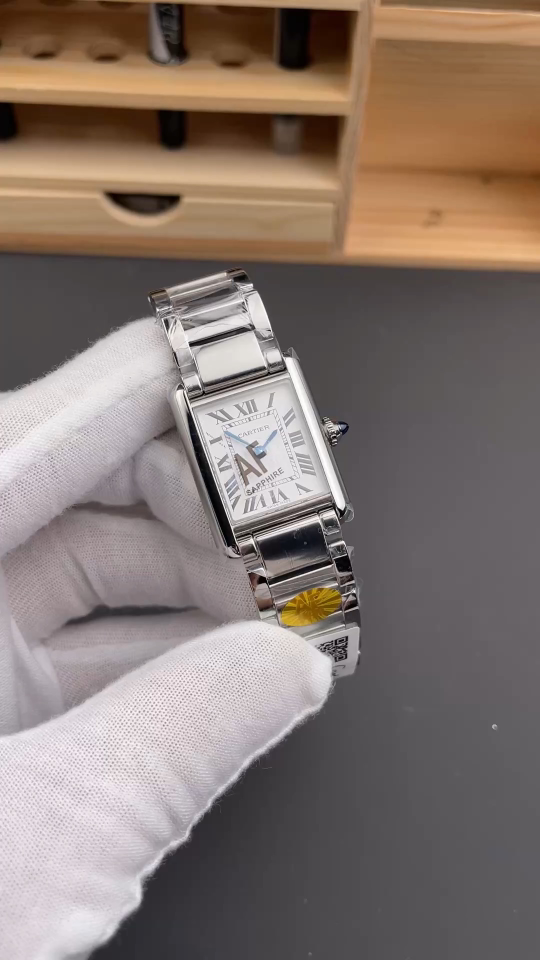
Caseback engravings and hallmarks are the stamps, numbers, and marks pressed or laser-cut into the back of a watch case. In a "BV factory" listing they matter because genuine brands follow specific engraving and hallmark conventions, and copies imitate them with varying success. Knowing the vocabulary — what an engraving is, what a hallmark certifies, and what each brand actually puts on its casebacks — turns a quick glance into a real check.
The terms below come up constantly when comparing listing photos to genuine watches; the overall method is in our guide to identifying counterfeit watches.
Engraving versus hallmark: what the words mean
An engraving is any text or graphic cut into the metal — model names, serial numbers, depth ratings, limited-edition numbering, decorative medallions. A hallmark is a specific, regulated mark that certifies metal content: on precious-metal watches, Swiss hallmarks such as the St. Bernard dog's head, alongside the fineness stamp "750," certify 18-karat gold. Engravings say who and what; hallmarks say what the metal is, and because they are legally protected marks, their presence and form on a genuine watch follow precise rules. Mixing the two words up is common in listings, and it is worth correcting: a serial number is an engraving, not a hallmark. The distinction has a practical use, too. An engraving that imitates a real one is a copied detail like any other, while a hallmark that does not match the claimed metal is a flat factual contradiction — one of the few places where a single stamp can contradict an entire listing.
What Rolex puts on casebacks
Most Rolex sports models have plain, polished casebacks with no engraving at all — the Submariner, GMT-Master II, and Daytona are examples. That emptiness is itself a check: a Submariner listing with an elaborate engraved caseback is a mismatch with the genuine model's convention. Exceptions exist, notably the Sea-Dweller line, which carries engraved specification text. Gold Rolex models bear Swiss precious-metal hallmarks, and newer solid gold pieces are marked "750." More reference-level detail is in our Rolex guide.
What Omega puts on casebacks
Omega is the opposite: its casebacks are usually decorated. Seamaster models carry the engraved hippocampus (seahorse) medallion, the "Seamaster" wordmark, and often the depth rating; the Planet Ocean and other divers add specification text. Serial numbers are engraved on the case, and modern Master Chronometer calibres are tied to a METAS certificate. A Seamaster-style watch with a plain caseback, or a medallion with wrong proportions, is exactly the kind of mismatch to note against genuine reference photos.
What Cartier puts on casebacks
Cartier engraves the model name, a case number, and an individual serial, and precious-metal models carry fineness and hallmark marks; limited editions carry their numbering. Cartier's engraving is notably fine and precise — thin, evenly spaced letterforms — which makes sloppy copies easier to spot than sellers expect. See the Cartier guide for the model families and their caseback conventions.
Where the imitations fall short
- Depth and method. Genuine engravings are typically deep and machine-struck or cleanly laser-cut; copies are often shallow laser work that looks grey and soft in macro photos.
- Hallmark placement and form. A hallmark in the wrong position, the wrong shape, or on a steel watch that the brand only made in gold is a flat contradiction.
- Wrong convention for the model. An engraved caseback on a model the brand ships plain, or a plain one where the brand engraves, is a specification mismatch.
- Mismatched serials. The number on the caseback should agree with the number on the warranty card and, where applicable, on the movement.
Reading the caseback in a listing
Caseback photos are the ones sellers skip, so the first step is asking for them: straight-on, sharp, ideally one shot of the center and one of the lugs. Then compare against the genuine model's documented convention, not against other listings, which tend to share the same mistakes. If the seller will not photograph the caseback, that is a gap in the evidence; a buyer can only check what is shown. And remember what the marks actually prove once checked: they show whether the engraving conventions match the claimed model. They cannot prove the watch is genuine, because a copied caseback is part of the same imitation as the dial and the bracelet — the same point made for the label in the BV factory explainer.
Frequently asked questions
Do Rolex sports watches have engraved casebacks?
Mostly no — Submariner, GMT-Master II, and Daytona casebacks are plain, with the Sea-Dweller among the notable engraved exceptions. An engraved Submariner caseback is a mismatch with the genuine convention.
What does a "750" stamp mean?
It is the fineness mark for 18-karat gold, often accompanied by Swiss precious-metal hallmarks such as the St. Bernard dog's head on genuine gold watches.
Why do Omega casebacks have a seahorse?
The hippocampus (seahorse) medallion is Omega's long-standing emblem, engraved on many Seamaster casebacks along with model text and depth ratings.
Should the caseback serial match other numbers on the watch?
Yes — the caseback serial should agree with the warranty card and, where the movement carries one, the movement serial; mismatches are red flags.
Can a correct-looking caseback prove a watch is genuine?
No. Caseback engravings are imitated along with everything else; they can rule a watch out, but they cannot rule it in.
本コンテンツは一般的な時計教育を目的としています。個別の製品を検証したり真贋を保証したりするものではなく、第三者のブランドや工場とは一切関係ありません。
