
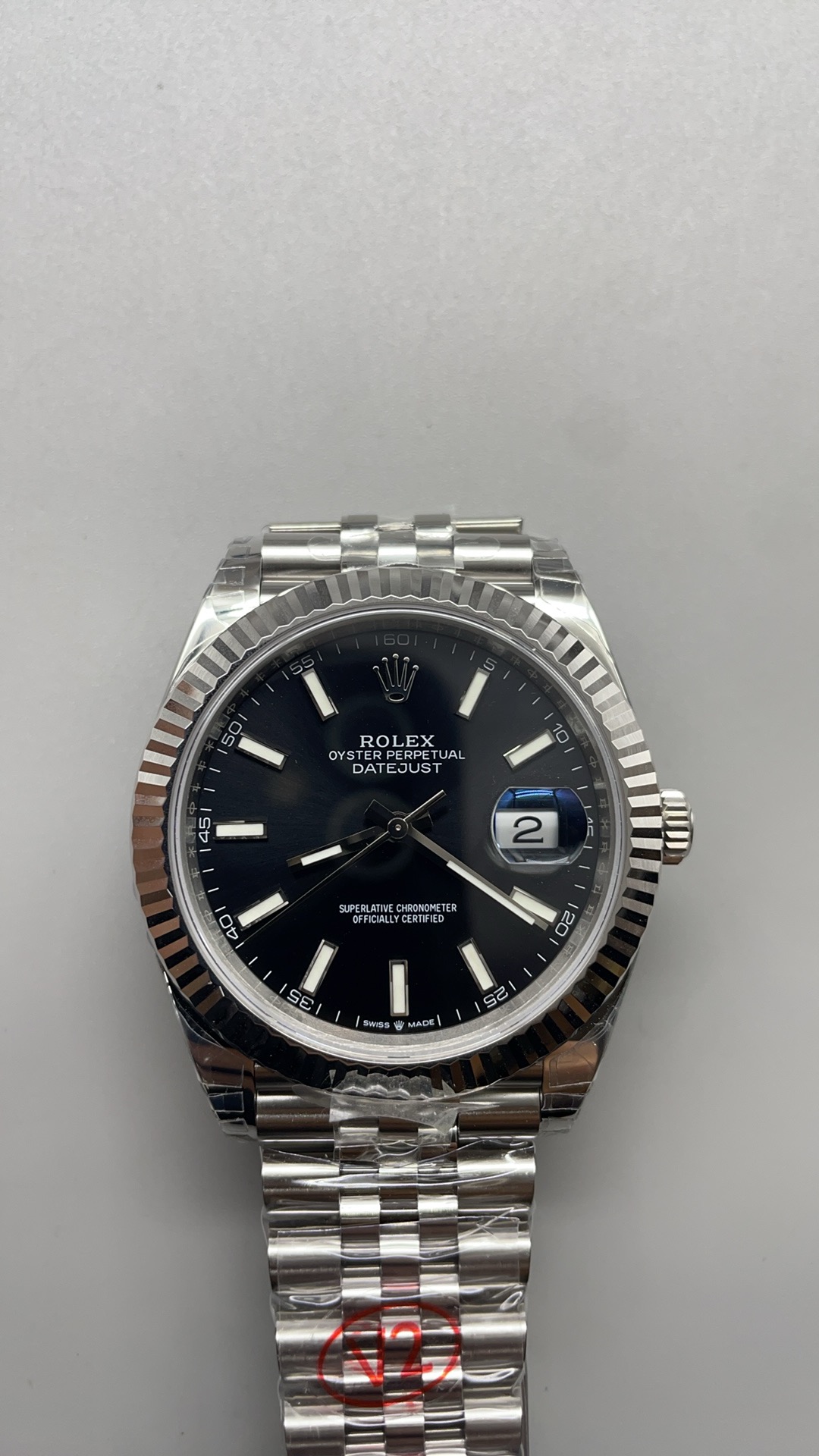
Almost every VS factory listing leans on the same small set of phrases, and none of them mean what they sound like. "1:1," "super clone," "Swiss movement," and letter-grade rankings are seller marketing built on forum slang. There is no certifying body behind them, no third party checking them, and no consumer authority enforcing them. A listing can call a watch 1:1 with a genuine Submariner and be wrong on both counts while staying up for sale. Here is what each claim actually is, and a checklist for reading any listing.
The claims, decoded
"1:1" and "super clone"
Both phrases come out of replica forum grading, where members informally rank how closely a copy resembles the original. There is no standard that defines 1:1, no measurements behind it, and no consequence for using it loosely. On a listing, it is an opinion stated as a fact. See what replica watch grading claims are worth for the full breakdown.
"Swiss movement" and "genuine Swiss movement"
A genuine Swiss movement is one manufactured in Switzerland by companies like ETA, and many genuine brands fit those calibers in their own watches. In copy listings, "Swiss movement" is routinely applied to movements that merely imitate a Swiss caliber's appearance or borrow its name. The difference between movement types is explained in automatic vs quartz movements, and the key point here is that the phrase functions as a search term more than a fact.
"AAA," "5A," and other letter grades
Grade ladders come from the same informal vocabulary. No grader exists, no grading sheet ships with the watch, and two sellers' "AAAA" labels can describe different products. These grades are part of the factory terminology buyers encounter, not a scale anyone administers.
"Factory direct" and "VS factory original"
Because the label has no verifiable company behind it, there is no supply chain to be "direct" from and no original to compare against. The claim is unfalsifiable from the buyer's side, which is exactly why sellers use it.
A checklist for reading any listing
- Ignore adjectives and grades; look at photos of the actual watch, including the caseback and movement if shown.
- Treat any claim containing a number, a grade, or the word "genuine" as unverifiable marketing.
- Search the seller's other listings. A catalog of identical "grades" across dozens of models is a pattern, not a quality record.
- Ask in writing where the watch ships from and who covers a customs seizure. The answer usually shows what the claims are worth.
- Compare the price with the genuine model on our Rolex or Omega pages. A Submariner at a few percent of retail is not a mystery discount.
What would make a claim real
A claim becomes meaningful when something outside the seller can verify it: a receipt from a genuine manufacturer, a serial that a brand service center confirms against its records, a purchase through an authorized dealer. VS factory listings offer none of these, which is the point. Everything the seller controls — photos, grades, cards, stamps — is marketing until an outside party confirms it.
Reading the photos: what the listing shows and hides
Listing photos are the one part of the page tied to something physical, and they still lie in specific ways. Watch what is absent: no straight-on shot of the caseback, no movement photo, no lume shot in the dark, no picture of the clasp logo. Each omission is a choice. Sellers photograph what flatters the product — polished angles, close crops, warm light — and omit what invites comparison. When every photo is a three-quarter view at arm's length, the claim language is doing all the work, and that is the tell.
What a serious seller would show instead
Compare with how a careful seller of genuine watches lists a watch: full reference number, service history where it exists, macro shots of the dial and movement, and an offer to answer specific questions. None of that requires being authorized; it requires standing behind the item. A VS factory listing cannot afford any of it, because the more a buyer sees, the less the grades matter. That asymmetry — the gap between what genuine listings show and what claim-driven listings hide — is the most reliable test in this market.
Why the same claims keep working
These phrases persist because they compress a long argument into two words. "1:1" sounds like a measurement; "Swiss movement" sounds like a certification; "factory direct" sounds like a supply chain. Each borrows the shape of a real claim — the measurement, the certification, the supply chain — without any of the substance, and listings count on buyers not asking who performed the measurement or issued the certification. The checklist above is the asking.
Frequently asked questions
Do any of these grades have an official definition?
No. Terms like 1:1, super clone, and AAA grades come from informal forum usage. No standards body, government agency, or manufacturer defines or enforces them.
Can I trust photos that show a card or sticker reading VS factory?
No. Cards, stickers, and tags are printed by the seller and verify nothing. Genuine brands do not issue anything with a replica-factory label on it.
Why is Swiss movement used so often?
Because buyers search for it. Swiss-made status is a regulated claim on genuine watches, which gives the phrase credibility that sellers borrow.
Is a 1:1 claim a promise I can enforce?
In practice, no. Most sellers of these watches operate outside enforceable channels, and no platform or regulator recognizes the claim.
Ce contenu est destiné à l'éducation horlogère générale. Il ne vérifie aucun produit individuel, ne garantit pas l'authenticité et n'est affilié à aucune marque ou usine tierce.
