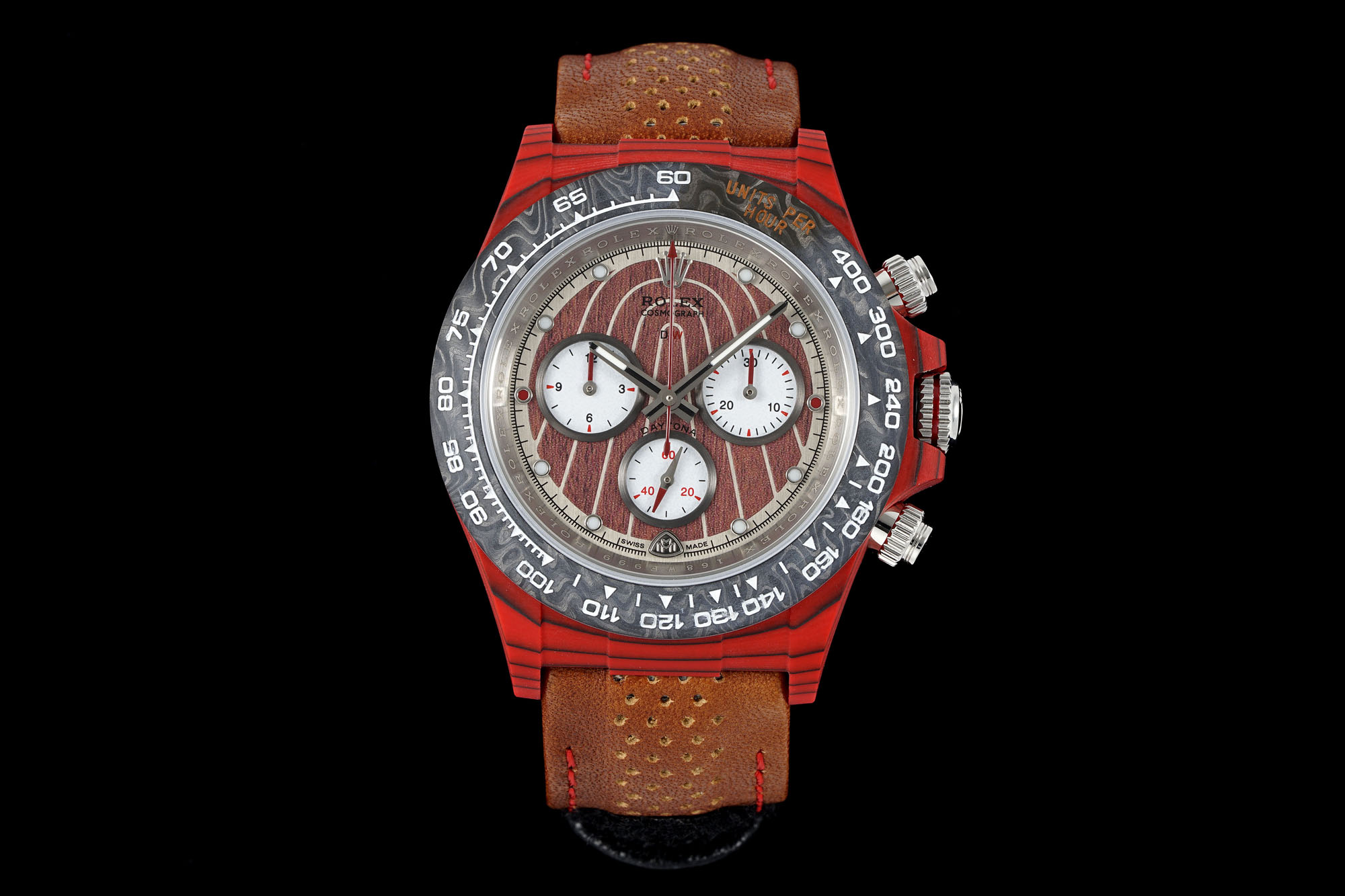
Most of the trademark and import language attached to BV factory watches is seller framing rather than verified fact. Claims such as "no customs risk" or "100 percent legal" describe what a seller wants a buyer to believe, not what any authority has confirmed. Luxury watch brands do not license the production of unauthorized copies, and customs agencies in many countries have the power to seize goods that infringe trademarks. Below are the phrases to recognize, with what each one actually implies.
Claims about legality
BV factory listings and the forum posts around them often describe the product as effectively legal to buy, own, and ship. The wording varies, but the three patterns below recur, and the common thread is that each phrase borrows a legitimate concept and stretches it.
"No trademarks are involved" or "this is a homage"
A homage is, in normal use, an unbranded watch with a design inspired by a famous model. If the dial, crown, or case carries a brand's name or logo, the trademark is involved by definition, because that mark is the brand's property and appears without authorization. The homage label does not change what is on the dial.
"100 percent legal to buy and own"
Laws on buying, owning, and importing counterfeit goods differ by country, and a seller's blanket statement does not cover any specific jurisdiction. In many places the sharper legal exposure sits with importation and sale rather than mere ownership, which is why sellers attach the reassurance to the shipping part of the pitch instead of the purchase itself.
"We only sell private-label models"
Private label means a product made for a seller's own brand and marked with that brand. A watch marked with someone else's trademark is not a private-label product, so the phrase is being used to borrow a legitimate retail concept and apply it to goods that do not fit the definition.
Claims about customs and shipping
Shipping is where BV factory marketing is most specific, because delivery is the moment the buyer's risk is decided.
"Guaranteed customs passage" or "no customs risk"
No seller controls a customs agency. Agencies such as US Customs and Border Protection and their equivalents elsewhere inspect packages, and counterfeit trademarked goods can be detained or seized in many countries. A delivery promise is a seller policy about replacements or refunds, not a legal status, and it applies only if the seller chooses to honor it.
"Grey market stock"
In legitimate watch retail, grey market describes authentic watches sold outside a brand's authorized dealer network. A copy bearing a brand's name is not grey market stock; the term is borrowed to make the listing sound like a normal retail situation. Our BV factory terminology guide covers the naming pattern in more detail.
"Seized stock" or "factory overstock being resold"
These are origin stories, not verifiable facts. Nothing a buyer can check confirms that a given watch came from confiscated inventory or a production surplus, and the story conveniently explains why the price sits below retail. The story works because it cannot be disproven from outside, which is exactly what makes it marketing rather than disclosure.
Claims about the factory and parts
"Made in the original factory" or "authorized parts"
Brands do not supply parts or production capacity to unauthorized makers, so a claim that a copy comes from the same source as the genuine article is unverifiable by design. The factory names themselves are forum nicknames, as explained in our guide to replica grading claims.
"Same suppliers as the genuine brand"
Supply-chain claims have no public records behind them. A listing can state this; nothing lets a buyer test it, and the statement is structured precisely so that no test is possible.
How trademark and import rules actually work
Trademarks protect names, logos, and other signs that identify a source of goods. Using a registered mark on unauthorized merchandise is infringement in many jurisdictions, and the counterfeit trade is what customs enforcement is built to intercept. In the United States, for example, customs has statutory authority to seize goods that bear counterfeit marks. Other countries maintain equivalent powers, though enforcement intensity, treatment of small parcels, and penalties all vary. None of this is a blanket statement about any one country's law; the point is narrower — the protections sellers promise are beyond their control, while the risks they wave away sit with the buyer's address.
For the other side of the equation, how to identify counterfeit watches walks through the physical and documentary checks that matter more than any seller statement.
Why the phrasing keeps changing
The vocabulary around these watches shifts constantly — "legal," "grey market," "homage," "customs-safe" — because new wording sounds current and fits different platform rules. The labels change faster than the underlying situation does, which is itself useful information: when the language keeps moving, the claims are doing marketing work rather than describing a fixed legal or factual status. Questions about what any of it means in practice come up constantly in our FAQ.
Frequently asked questions
Does a "guaranteed delivery" promise mean the watch will clear customs?
No. No seller controls what a customs agency does with a package. A delivery promise is a seller policy about replacements or refunds, and it applies only if the seller chooses to honor it.
What does "grey market" really mean?
In legitimate watch retail, grey market means authentic watches sold by sellers outside the brand's authorized network. A copy bearing a brand's name is not grey market stock; the label is borrowed to make a listing sound legitimate.
Are buyers legally liable for importing a counterfeit watch?
Rules vary by country and by circumstances such as quantity and intent. In many jurisdictions counterfeit goods can be seized regardless of quantity, and importing for resale is treated more seriously than a single personal purchase. A seller's blanket assurance cannot override the laws of the destination country.
Do brands ever authorize replica production?
No. Brands do not license or authorize the manufacture of copies of their own designs, and replica products are made without any involvement from the brand named on the dial.
Ce contenu est destiné à l'éducation horlogère générale. Il ne vérifie aucun produit individuel, ne garantit pas l'authenticité et n'est affilié à aucune marque ou usine tierce.