
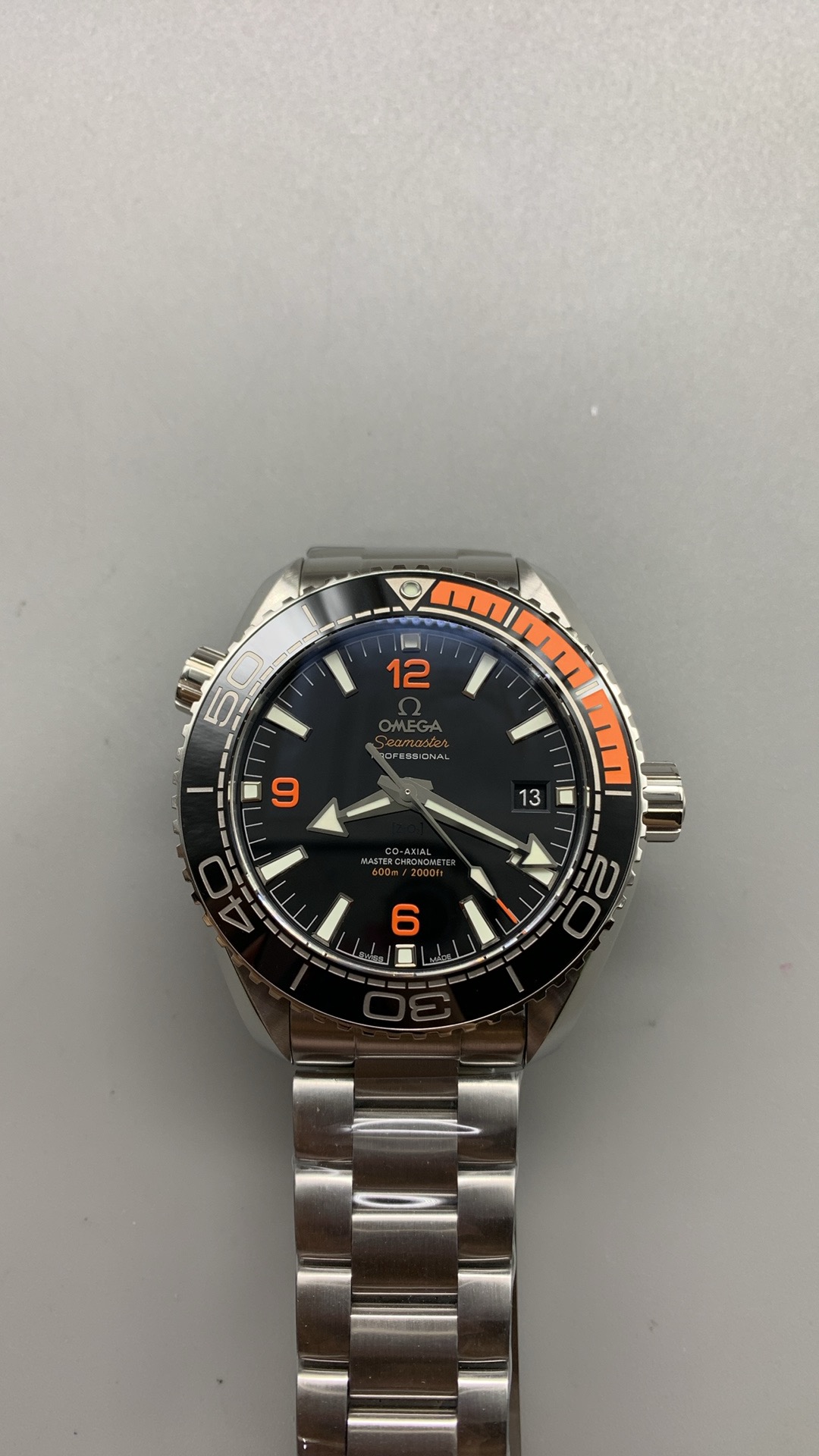
Yes. Cleaning, humidity, and moisture precautions are more uncertain for NOOB-labeled watches because the water-resistance rating printed on them is a claim, not a certification. Genuine watches are tested to a rated depth and their gaskets are documented; NOOB-labeled watches have unverified ratings and unknown seals, so the only safe assumption is that the watch is not water-resistant until a pressure test proves otherwise.
Why the printed depth rating cannot be trusted
A depth rating is meaningful only when the case was engineered to it and the seals were tested. On a NOOB-labeled watch neither can be confirmed: the case dimensions follow a design, but gasket sizes and materials are undocumented, and no test certificate exists. Sellers often print the same depth rating as the original model, but a printed number is not a test result. The same applies to the crown and case back — a screw-down crown protects only if its threads and gasket are intact, and a snap-on case back seals only if its gasket is the right size and still pliable, none of which can be read from the outside. This is the water-resistance question in its clearest form, covered in the water resistance explainer.
A conservative cleaning and moisture routine
The routine below treats the rating as unknown until a test says otherwise.
- Treat the watch as having no verified water resistance. Until a pressure test says otherwise, assume any submersion can damage it.
- Inspect the crown before any contact with water. If it is a screw-down crown, verify it is actually screwed down; if it is push-pull, do not rely on it for protection.
- Rinse only after a successful pressure test. Fresh-water rinsing after salt or chlorine exposure is good practice only when the seals are known to be sound.
- Keep soap, shampoo, and detergent off the watch. Degreasing agents attack seals and lubricants over time, and steam and hot water do the same faster.
- Dry with a soft, lint-free cloth after any moisture contact, and leave the crown closed while doing so.
- Watch for fog under the crystal. Condensation on the inside means moisture is already in the case and corrosion has begun; stop wearing the watch.
- If fog appears, act the same day. Have the case opened, dried, and re-sealed; waiting turns a cleanup into a movement repair.
- Store dry. A closed drawer away from the bathroom beats a humid room, and a desiccant packet in the storage box costs almost nothing.
- Before any deliberate swimming or diving, have the gaskets replaced and the case pressure tested by a watchmaker, then re-tested at reasonable intervals.
For genuine watches most of this list is standard care — the mechanical watch care checklist covers the same ground. For NOOB-labeled watches the difference is that step one never gets resolved by the label alone: until a watchmaker has pressure tested the case, there is no rating to rely on, and the NOOB factory explainer shows why no documentation exists to change that.
Straps change the moisture picture
The strap or bracelet also matters. Leather absorbs moisture and holds it against the case, so a leather strap should stay dry and out of the shower entirely; metal bracelets tolerate rinsing but trap salt in the links; rubber is the most forgiving around water but degrades with oils and solvents. The strap comparison page breaks down how each material behaves around water and daily wear.
Bracelets and straps are the one area where owners hold real control, since a strap swaps in minutes. A leather strap worn against wet skin fails far earlier than one kept dry, and a water-resistant case cannot compensate for a strap that holds moisture against the lugs all day.
What to do after water exposure that went wrong
If the watch has been submerged and you cannot confirm the seals were sound, remove it, wipe it, do not operate the crown, and take it to a watchmaker for opening and drying. Do not bury it in rice, which introduces dust and does not remove moisture already inside; do not use a hairdryer, which can drive moisture deeper and damage lubricants. The repair bill for prompt drying is small; the bill for corrosion is not. The lesson repeats across every step of this routine: with a genuine watch, the printed rating plus a recent pressure test settles the question. With a NOOB-labeled watch, only the pressure test does, and until it happens the conservative assumption is the correct one.
Frequently asked questions
Can I swim with a NOOB-labeled watch that says 300 m on the dial?
Only after a watchmaker has replaced the gaskets and pressure tested the case. The printed number is a design copy, not a certification.
How do I know if moisture has gotten inside?
Fog under the crystal that persists, especially after temperature changes, is the usual first sign. Discolored dials and corroded hands come later.
Is it safe to clean with soap and water?
Mild soap and lukewarm water are fine for a sealed, pressure-tested case, but soap residues degrade seals over time, so rinse well and dry thoroughly.
How often should gaskets be checked?
For genuine watches, watchmakers commonly suggest pressure testing every one to two years if the watch is worn in water. For NOOB-labeled watches with unknown seal history, the first test should happen before any intentional water contact at all.
Este contenido tiene fines educativos generales sobre relojería. No verifica ningún producto individual ni garantiza su autenticidad, y no está afiliado con marcas ni fábricas de terceros.