
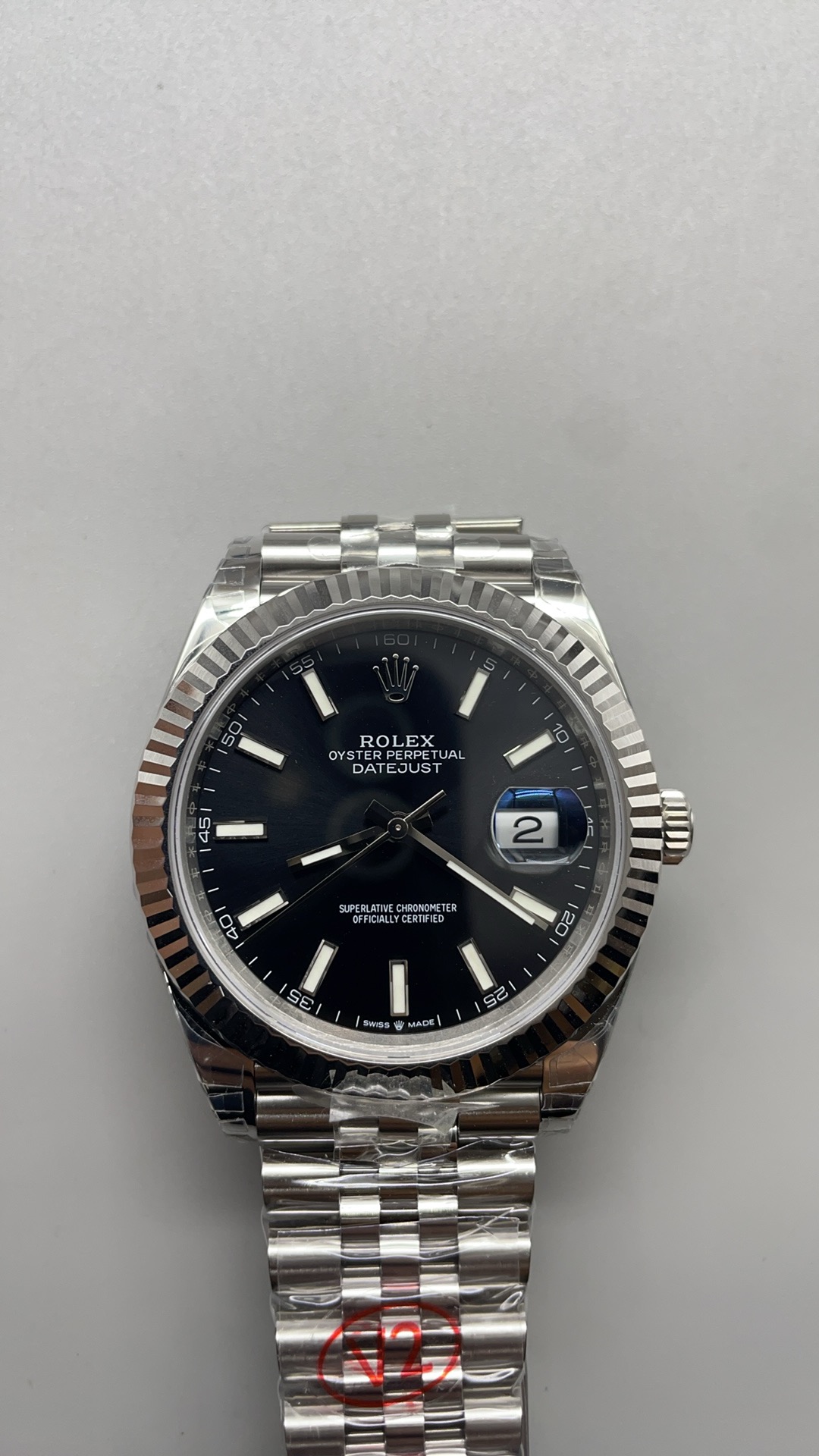
Misleading claims in a listing do not change what a watch is. A watch advertised as 'BV factory' is an unauthorized copy if it carries brand marks, and the adjectives around that label—'best,' 'original,' '1:1,' 'AAA'—are sales language, not legal protection or quality proof. What the claims do change is your ability to get your money back and your duty to treat the listing honestly. Here are the questions that matter, answered directly.
What does a 'BV factory' claim mean in a listing?
It means the seller is using a forum nickname to suggest a specific workshop made the watch. No buyer can verify that suggestion. The term has no official definition, no registry, and no factory behind it that can be reached, checked, or held responsible. For a fuller picture of how the name is used, see our explainer on the BV factory term. In practice, the label functions as a price justification and a search keyword, nothing more.
Can listing claims make an unauthorized watch legal?
No. Trademark law looks at the marks on the product, not the words in the listing. If a watch reproduces a registered logo, crown, or dial signature without authorization, describing it as a 'replica,' 'homage,' or 'factory version' does not convert it into a lawful item. The same applies to promises that a package will clear customs: the seller's optimism does not bind customs authorities, which seize counterfeit goods on their own authority. Misleading claims about legality are among the strongest signals that a listing should be treated with suspicion.
Which phrases should make you pause?
Certain phrases appear across informal watch marketplaces and almost always signal an unauthorized product marketed with inflated language.
- '1:1 clone' or '1:1 mirror' — claims the watch copies every dimension of a genuine model.
- 'Swiss movement' — a vague term sellers use without naming the caliber.
- 'AAA grade' or 'AAAA' — invented grading with no standard meaning; see our page on replica grading claims.
- 'Original factory' or 'factory direct' — unverifiable origin claims.
- 'Same parts as the genuine article' — a claim no brand would honor and no seller can prove.
None of these phrases is a definition of quality. They are written for search engines and for buyers who want to believe.
Questions that flush out misleading claims
When a listing leans on factory labels and grade terms, a few plain questions force the seller to either produce something checkable or retreat to more words. Ask what movement is inside, by exact caliber. Ask who services the watch and whether the brand's service center will accept it. Ask for a photograph of the specific watch you will receive, with today's date written on paper beside it. Ask what happens if the watch fails inspection by an independent watchmaker. Sellers of unauthorized watches answer these questions with delays, vague reassurances, or silence—each of which is a more useful answer than the claims in the listing. The questions cost nothing, and they convert marketing language back into the plain facts it was covering.
What can you do about a misleading listing?
If you bought a watch based on claims that turned out to be false, your remedies run through the marketplace or payment provider, not through the brand or any factory. Document the listing as it appeared—screenshots with the claims visible—then open a dispute on the platform where you bought it. Marketplaces treat materially false descriptions as a reason to reverse a transaction. If the platform fails, a dispute with the card issuer or payment service may be available within its time limits. If you have not bought yet, the cheapest remedy is to not buy: a listing that leans on unverifiable claims will not become more truthful after payment. If you believe a listing is counterfeit, reporting options are covered in our FAQ section.
Why do listings rely on these claims at all?
Because they work well enough to keep being used. Buyers search for factory names and grade labels, so sellers put those words in listings; the words then become the search terms for the next buyer, and the cycle continues. The claims also let sellers justify prices above what an unnamed copy would fetch. Recognizing the pattern is the practical defense: every term in a listing that describes origin, grading, or movement is unverifiable until proven otherwise. If you want to know what a genuine watch actually looks like, our guide to identifying counterfeit watches walks through the details that matter.
Frequently asked questions
What does 'authentic replica' mean?
Nothing. The phrase is contradictory—an item is either an authorized product of the brand or it is not. Sellers use it to soften the word 'replica' in listings.
Can I trust photos in a BV factory listing?
Photos can be stock images of genuine watches or of a different example than the one shipped. They are evidence of what a seller wants you to see, not what you will receive.
If the watch arrives and the claims were wrong, who is responsible?
In practical terms, the seller and the marketplace you paid through. The brand has no relationship to the transaction and will not make the buyer whole.
Are 'factory direct' sellers more honest?
There is no way to verify a 'factory direct' relationship. The claim is marketing; it does not create accountability.
Este contenido tiene fines educativos generales sobre relojería. No verifica ningún producto individual ni garantiza su autenticidad, y no está afiliado con marcas ni fábricas de terceros.