
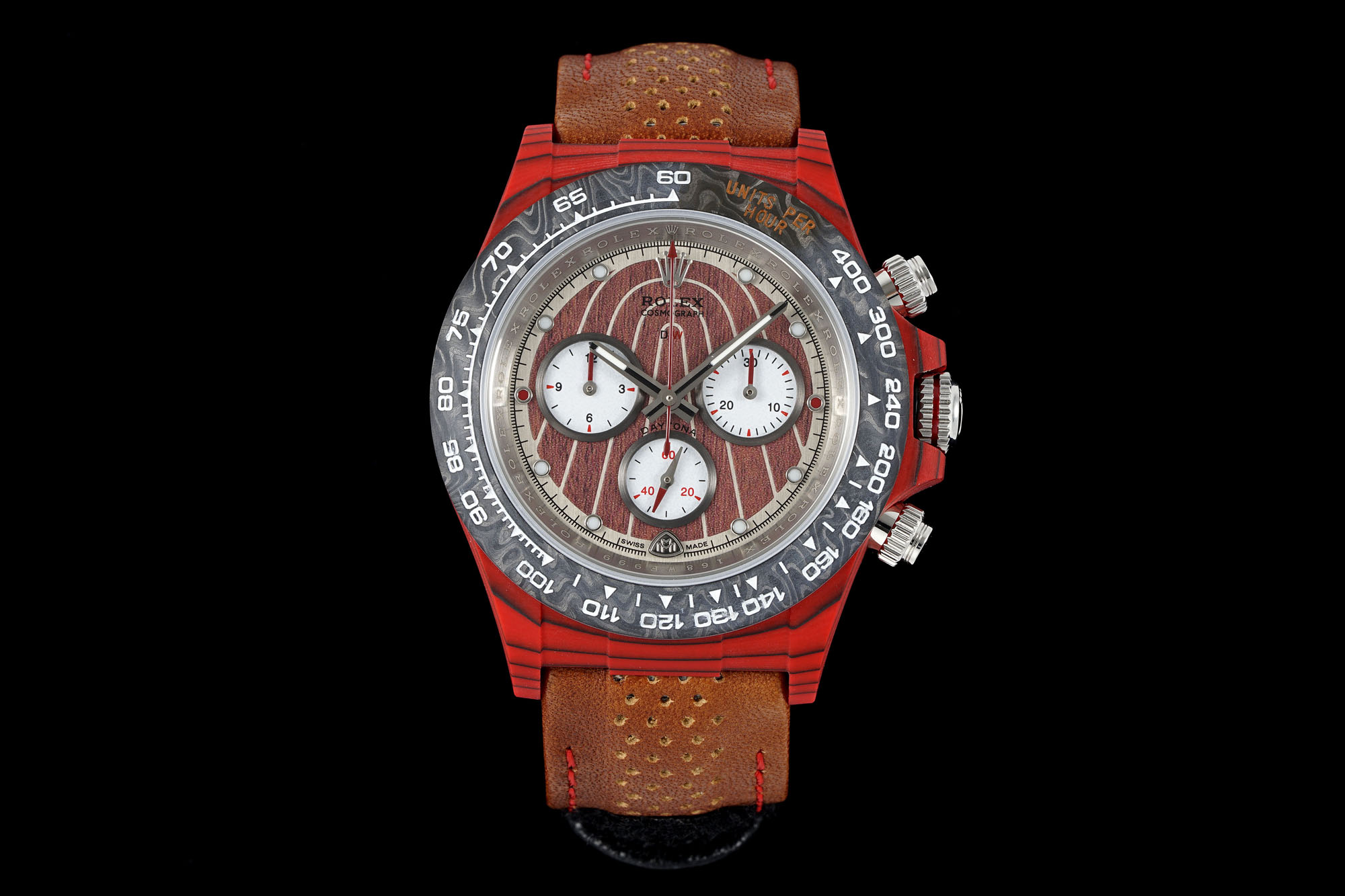
Listings for “AAA-grade replica watches” lean on a short, repeating vocabulary: “1:1,” “exact copy,” “real movement,” “mirror quality,” “you can't tell the difference.” None of these phrases is measurable, and none corresponds to anything an independent party checks. The practical response is to read them as advertising copy, then run the listing through a short verification routine.
The Claim-by-Claim Checklist
- “1:1 from the original.” No one measures replica cases against genuine specifications and publishes results. The phrase is forum shorthand with no verification behind it, exactly like the tier names dissected in our VS, Noob, and Clean factory terminology guide.
- “Swiss movement.” Frequently applied to Asian-produced clones of Swiss caliber designs. A genuine Swiss movement is manufactured in Switzerland; on a replica listing, the claim is usually the looser reading. If the origin matters to you, ask for the caliber reference and the manufacturer.
- “Sapphire crystal.” Cannot be verified from photos. Quality, coating, and flatness vary widely, and a photo shows none of it. The water-drop and tap tests sellers suggest do not travel through a listing image.
- “316L steel” or “904L steel.” A claim about alloy composition no buyer can check without equipment. Steel grades exist and are documented; the claim in the listing is not documentation. See our case materials comparison for what these grades actually mean.
- “Same weight as the original.” Weight depends on case, movement, and bracelet together. The claim is easy to write and rarely tested, because testing it requires the watch and a scale — both of which the seller holds.
- “QC photos of your exact watch.” Photos can show a watch; they cannot show what is inside it, and the same stock images circulate across hundreds of seller accounts. A photo set is evidence that a watch exists, not that yours is the one pictured.
- “Full box and papers.” Accessories do not make a watch authentic, and counterfeit packaging exists for the same reason the watches do. The counterfeit identification guide treats paperwork the way it treats the watch — as something to verify, not something to accept.
The checklist has a shared logic: every claim in it is falsifiable in principle, but only with equipment or access the buyer does not have. The seller knows this, which is why the claims repeat — they are cheap, specific-sounding, and untestable from the buyer's chair.
Listing Elements That Signal Caution
- Stock photos reused across sellers, or photos that avoid the case back and clasp.
- Prices far below market with a “limited time” pressure attached.
- Payment methods that route outside the platform's protections.
- A store with no verifiable address and a returns policy that reads as a refusal.
- Reviews that are all recent and all five stars — a pattern worth noticing, not proof of anything.
None of these signals proves anything alone. A new store can be honest, and reused photos can appear on a careful seller's page. The signals work in combination — two or three of them together, plus unverifiable claims in the description, is a pattern worth acting on.
A Five-Minute Verification Routine
- Search the exact phrases the listing uses — “1:1,” “mirror quality,” “AAA-grade.” Finding hundreds of identical listings tells you how standardized the copy is.
- Ask for the specific evidence behind the one claim you care about: the caliber reference, the measured dimensions, the crystal type.
- Treat anything unverifiable as unverified. That is not cynicism; it is the only reading a listing can support.
- Compare the listing against a trusted reference for the model it imitates, using the reference shots in our watch collections.
- Decide on price, evidence, and disclosure — not on adjectives.
No listing adjective changes what the watch is, and no tier label adds verification, as the grading claims guide explains in more depth. The checklist above works because every item on it is checkable by the buyer, cheaply, before any money moves — which is precisely the property the claims themselves lack.
Two further habits complete the routine. First, keep the listing screenshots — a description that changes after payment is a dispute waiting to happen. Second, check the seller's other listings: a store that sells the same watch under three grade labels is telling you how much the labels weigh.
Frequently asked questions
What does “1:1” actually mean?
Community shorthand claiming a copy matches a genuine reference. No measurement or independent body sits behind the phrase.
Does “Swiss movement” mean the movement is Swiss?
Not necessarily. Sellers routinely apply the word to Asian-produced clones of Swiss caliber designs. If origin matters to you, ask for specifics.
Do QC photos guarantee the watch you receive?
No. They document a watch, not the parts inside it, and not necessarily the one that ships.
How do I tell whether a listing is honest?
Ask for verifiable specifics — caliber, dimensions, materials — and compare against trusted references. If the answer is only adjectives, treat it as unverified.
Dieser Inhalt dient der allgemeinen Uhrenbildung. Er verifiziert kein einzelnes Produkt und garantiert keine Echtheit; zudem besteht keine Verbindung zu Drittmarken oder -fabriken.