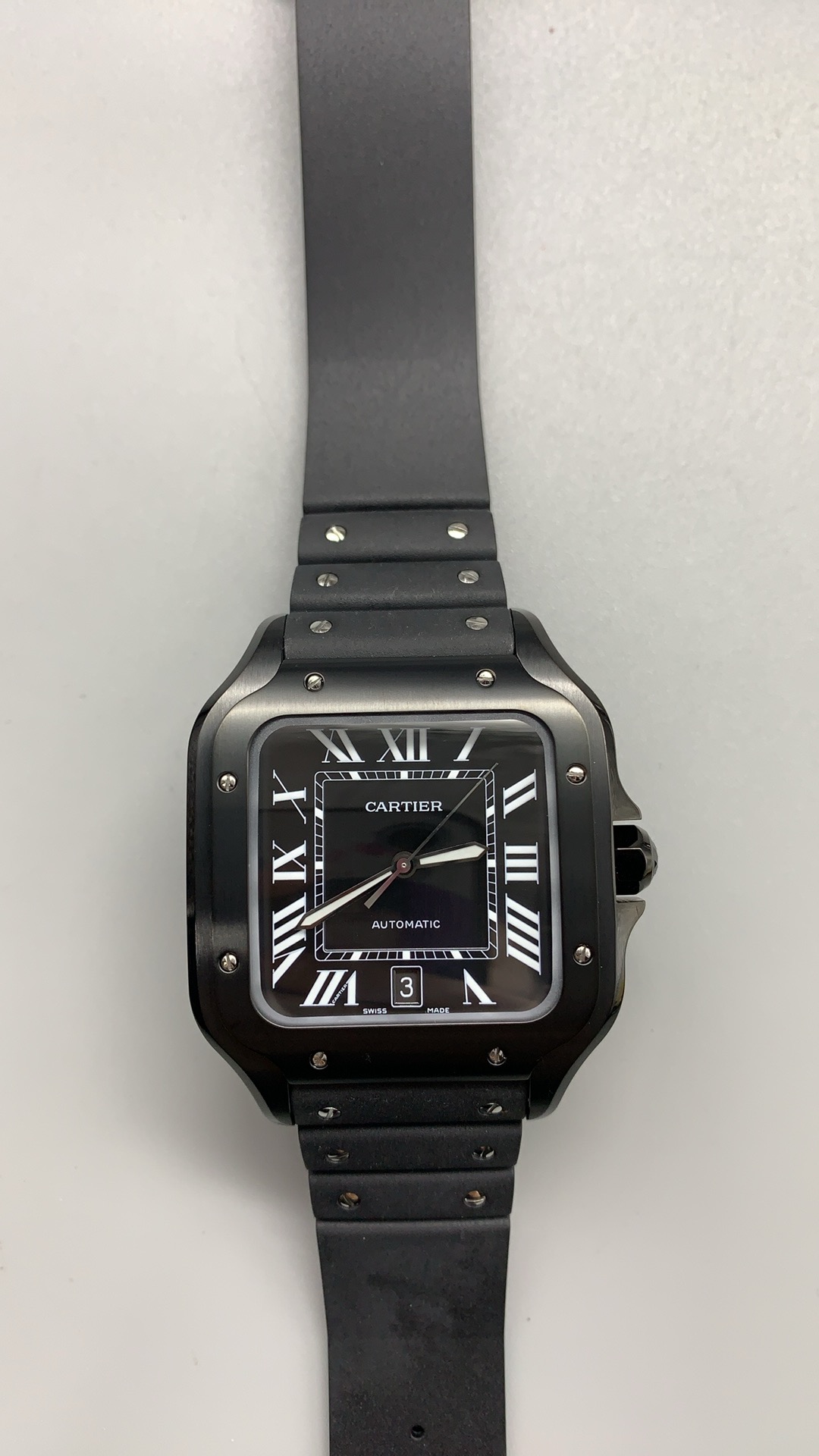
The back of a watch carries its least glamorous but most identifying marks: engravings, model stamps, and precious-metal hallmarks. Counterfeit watches, including those labeled “VS factory,” commonly get these details wrong — wrong text, wrong location, shallow tooling, or an exhibition caseback on a model that never had one. Work through the checklist below, starting with the most decisive checks.
Start with what should not be there
Most modern Rolex sports models — the Submariner, the GMT-Master, the Daytona — have plain, polished casebacks with no engravings and no window. If a listing shows one of those models with an elaborate engraving or a display back, that is a decisive warning sign. The rule works in both directions: genuine exhibition casebacks are common on many Omega and Tissot models, so a transparent back is a warning only when the genuine reference never had one. That is why every caseback check begins with the brand’s official photos of the exact reference, not with general expectations.
The same logic applies to engravings of certifications or limited-edition wording. If a caseback announces a certification, a commemorative text, or a limited-run number, that text should correspond to something the brand actually issued. Sellers of counterfeits add decorative text because buyers associate engraving with legitimacy — on genuine watches, engraving is always specific, never decorative filler.
An engraving and hallmark checklist
Before starting, note that caseback checks require clear photos of the back; angled or reflective shots hide engraving quality. If the listing shows only the front, ask for a straight-on photo of the caseback before drawing any conclusion.
- Wording matches the model. Engraved text should match what the brand puts on that reference. Misspelled words or malformed logos are immediate red flags.
- Depth and finish are consistent. Genuine engravings are machine-applied with even depth. Watch for hand-scratched edges, shallow centers, and double-struck letters.
- Serial and reference consistency. The engravings on the case should agree with the paperwork and the markings elsewhere on the watch.
- Hallmarks on precious metals. Gold and silver cases carry legally required purity stamps — 750 for 18-karat gold, 925 for sterling silver. A blurry, shallow, or missing hallmark on a watch claimed to be gold is a warning sign.
- Nothing unexpected is stamped. Text that does not belong on the model — an extra factory name, a strange logo, decorative flourishes — is a sign of a decorated fake.
What genuine casebacks look like
Genuine caseback designs vary by brand and by model, and knowing a few patterns makes the checklist faster. Omega engraves the Seamaster Diver 300M caseback with its sea horse medallion and model text; Tissot stamps model and water-resistance information on many references; Rolex keeps most modern sports casebacks plain and engraves identifying marks on the case itself, between the lugs. The variety is precisely why each check starts from the official reference image. Material differences matter here too — how 904L steel compares with 316L is covered in our case material comparison.
One more pattern worth internalizing: on genuine watches, caseback text is nearly always functional — model identity, material marks, certification, or the brand name itself. On counterfeits, text tends toward the decorative: ornate logos, invented production numbers, and brand names stamped where the genuine model carries none. Function versus decoration is a quick filter that catches many fakes before the finer engraving checks even begin.
While you are behind the watch, check the lugs and bracelet end links too, since markings continue onto the case on many genuine models. Markings that suddenly change style between the caseback and the lugs — different fonts, different depth — suggest parts from different sources assembled into one watch.
When one sign is enough
A single decisive mismatch is sufficient reason to walk away: an exhibition back on a plain-back model, wrong text, or a missing hallmark on a watch claimed to be gold. You do not need to find every possible flaw to reach a decision. And the reverse does not hold: a caseback that passes all five checklist items does not make the watch genuine — it only clears one area of inspection. Combine these checks with the full screening process in our guide to identifying counterfeit watches.
Frequently asked questions
Do all Rolex models have plain casebacks?
Most modern steel sports models do. Some dress and precious-metal models carry engravings, so always check the specific reference against the brand's official photos.
What does 750 mean on a watch?
750 is the purity stamp for 18-karat gold, meaning 750 parts per thousand. Sterling silver is stamped 925. These hallmarks are legally required on precious-metal cases in most markets.
Can I open the caseback to check the movement?
Only with the seller's permission and ideally with a watchmaker present. Opening a case risks damage and can compromise water resistance.
Is a display caseback a sign of a counterfeit?
Only when the genuine model never had one. Many genuine Omega and Tissot models use exhibition backs, so the test is always against the official reference.
Dieser Inhalt dient der allgemeinen Uhrenbildung. Er verifiziert kein einzelnes Produkt und garantiert keine Echtheit; zudem besteht keine Verbindung zu Drittmarken oder -fabriken.