
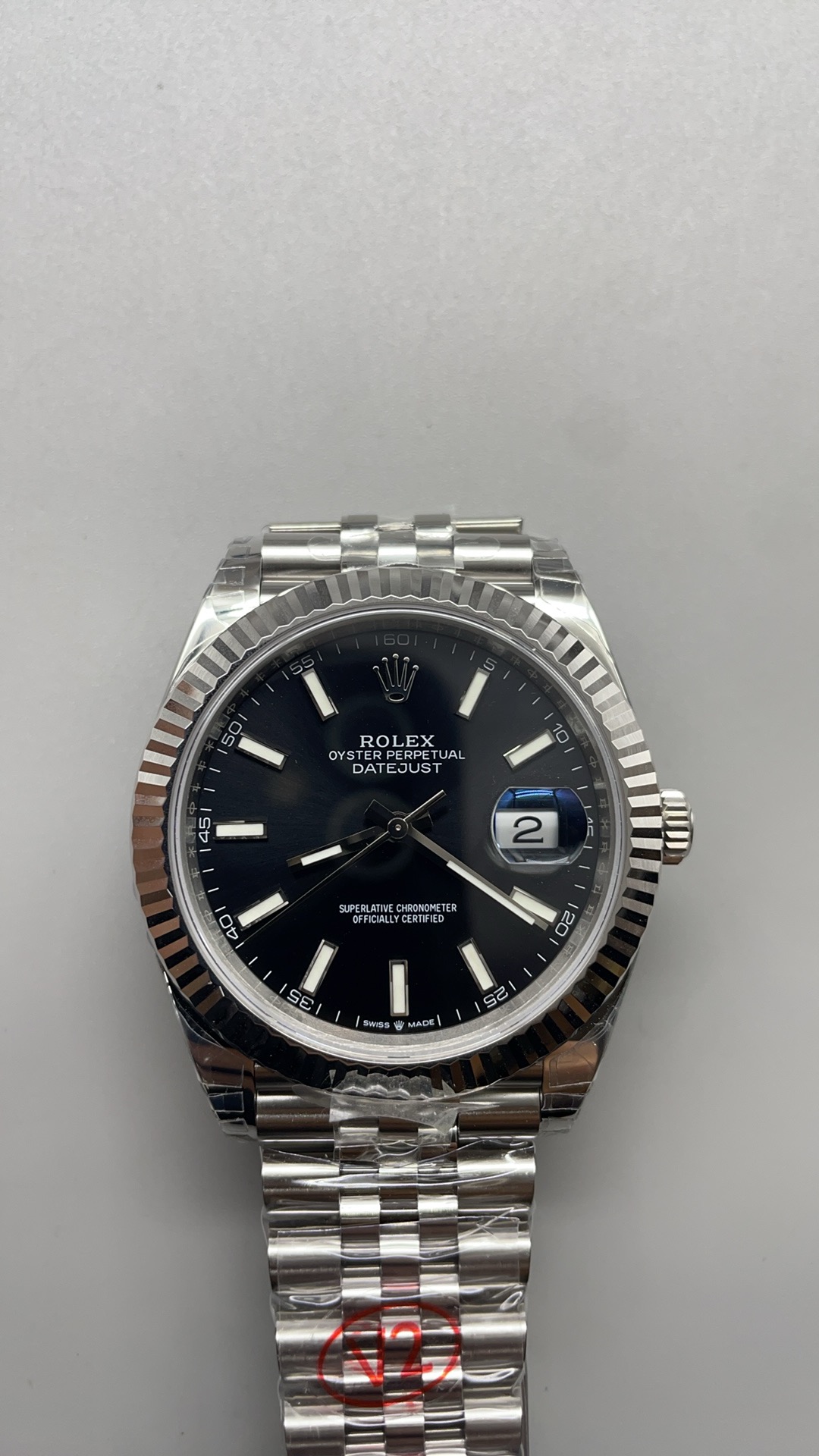
The vocabulary of replica listings has evolved in three overlapping waves: grade language such as AAA, ratio language such as "1:1," and today's factory-and-movement language built on names like Clean and VS plus clone calibers. The through-line is that each wave promised more specificity than the last while remaining equally unverifiable. AAA, once the top of the ladder, now sits near the bottom — demoted by its own successors, not by any standard.
Wave one: the grade years
In the 2000s, replica listings leaned on grades: A, AA, AAA, AAAAA, sometimes paired with "Swiss grade" and "Japan grade." The vocabulary came from street-market price tiers and translated directly to early auction sites, where titles were the search engine of the day. Nothing about the grades was defined anywhere, but their ordering was legible: more letters meant more money, and the escalation continued until the labels stopped sounding impressive. The era's logic was simple and complete: the label was the entire product, because nothing else about the watch could be shown to matter. The grading claims guide covers how that ladder still functions underneath newer language.
Wave two: the ratio years
Through the late 2000s and into the 2010s, "1:1" and "genuine quality" displaced the letter grades as premium language. The claim shifted from "better than other fakes" to "the same as the genuine article" — a completeness claim nobody could audit but that sounded far more precise. The ratio frame produced its own inflation too, with "1:1 best edition" and similar superlatives competing the way the letter grades had. This era also planted the factory-name habit: forums began grouping watches by claimed source rather than by grade, a shift the terminology explainer documents in detail. The ratio claim also reframed the buyer's question: instead of asking which grade of fake was on offer, buyers asked whether a fake was even distinguishable, a question sellers were happy to answer in the negative.
Wave three: the factory-and-movement years
The current vocabulary treats the factory name as the brand: Noob, Clean, VS, ZF, BV, and others appear where grades used to, and listings pair them with movement shorthand — A2824, A2836, "3135-style" — borrowed from genuine caliber naming. Batch labels such as V1, V2, and V3 add a sense of versioning to an unregistered supply chain. Where an old listing said "AAAAA replica," a new one says "Clean 126610 V3 A2824," and the extra detail is persuasive precisely because it reads like a specification. Whether any of it corresponds to a real factory, movement, or version remains unverifiable, as the Clean factory and Noob factory guides explain.
What drove each shift
- Buyer skepticism. Each generation of terms wears out as buyers learn it is hollow, so sellers need fresh specificity.
- Takedown pressure. Marketplaces and rights holders act on counterfeit language, and rotating vocabulary helps listings survive longer.
- Forum culture. Communities develop their own shorthand, and sellers copy it back into listings to sound like insiders.
- Price architecture. A new top tier lets sellers raise prices without changing products.
What never changed
Across all three waves, two things stayed constant. First, the vocabulary has always been self-issued — no trade body, regulator, or certifier has ever defined any of it. Second, the vocabulary has always pointed at the same underlying goods: unauthorized copies whose only documentation is what the seller writes. The waves are costume changes on the same transaction. That is why translation works so cleanly between eras: every term, old or new, reduces to a claim about a watch made by the person selling it, and the only question that ever mattered is the one none of the terms answers — what is actually inside the case.
Reading old and new terms side by side
The practical lesson is translation. An AAA label today means roughly "ordinary entry-level fake," a demotion from its 2000s meaning. A factory-name listing means "the current premium claim," with no more verification behind it than the old grades ever had. Neither era's vocabulary attached to a testable standard; both existed to sort prices, not watches. For how genuine watches are described by contrast — with references, papers, and documented specifications — the watch guides are the reference point that makes the replica vocabulary legible.
Frequently asked questions
When did factory names replace grades in replica listings?
Gradually through the 2010s as forums popularized factory naming. There is no single date, and grade language still appears alongside the newer terms.
Does AAA still appear in listings today?
Yes, mostly as an entry-tier label and as a search term newer sellers include because buyers still type it.
Are newer terms more reliable than the old grades?
No. The newer vocabulary sounds more specific — factory names, movement codes, version numbers — but none of it is more verifiable than the grades were.
Why does the vocabulary keep changing?
Buyer skepticism, marketplace takedown pressure, forum shorthand, and the need for new price tiers all push sellers toward fresh language.
Dieser Inhalt dient der allgemeinen Uhrenbildung. Er verifiziert kein einzelnes Produkt und garantiert keine Echtheit; zudem besteht keine Verbindung zu Drittmarken oder -fabriken.
