
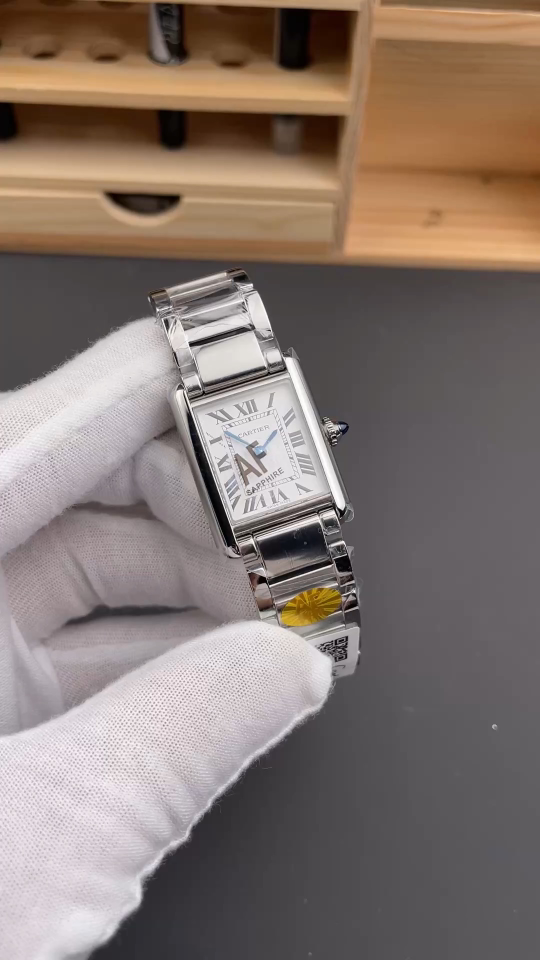
There is no official origin story for AAA-grade; the term was never coined by a brand, a certifier, or a standards body. The label grew out of informal marketplace and forum vocabulary, borrowing the letter-grade habit used for other consumer goods and applying it to watches no brand produced. Because nobody owns the term, nobody can say what it requires — and that, as far as anyone can verify, is the whole story.
The pattern it borrowed
Letter grades have long been used to rank goods in resale markets, from condition scales on used equipment to quality tiers in various product categories. Sellers of replica watches adopted the format because buyers already read A as "good" and AAA as "better." There is no record of a single seller or forum inventing the grade, and no date when it began; what survives is the pattern — an imported ranking habit with no ranking body behind it. The borrowing was never accompanied by a definition, which is typical of marketplace slang: the term arrived in use, not in a rulebook.
How it spread and inflated
Grades compete. Once several sellers used A, AA looked stronger, and AAA stronger still; later listings added AAAAA and attached sub-labels like "Swiss AAA" and "Japanese AAA" to suggest origin as well as quality. No one can pin the moment a particular grade appeared; the record is scattered and informal by nature, which is itself the point. The inflation is visible in the way the same watch has been listed under different grades in different periods, which is why our replica grading explainer treats every grade as a seller decision rather than a measurement. The same watch might be listed as AAA by one seller and AAAAA by another at the same moment, which would be impossible if the grades measured anything.
What nicknames are for in a listing
A grade does three jobs: it anchors the price to an implied tier, it suggests the seller ranked the stock, and it sounds established. None of those jobs requires the term to mean anything fixed. Buyers see the same grade across many listings and read consistency as meaning, when the consistency comes from copying, not calibration. The same logic produced the factory nicknames — Noob, Clean, and the rest — which work the same way, borrowing the shape of a real source without being one. The factory terminology guide connects the two vocabularies.
Why no definition exists
Definitions require an owner: someone with the authority to publish criteria and the standing to be wrong. Seller vocabulary has neither. The meaning of AAA drifts between sellers, between years, and between forums, and a term that drifts cannot be checked — only observed. That is the difference between a nickname and a standard, and it is why the origin question has the answer it does: the grade was never defined, so it was never official.
What the nickname never was
One clarification matters: AAA-grade never existed as a genuine-watch term that was later borrowed dishonestly. Brands have never used it, and no legitimate dealer catalog from any era uses it. It was born in the replica market's own listings and forums, grew there, and has never had any other home. That is why searching for its "official" meaning produces nothing but more listings.
Where the nickname shows up today
The grade survives because it costs nothing and fits everywhere: listing titles, chat messages, forum signatures, comparison tables between sellers. It also survives because newer vocabulary — 1:1, super clone, factory name plus version number — has partially absorbed it, with AAA now sitting at the budget end of the vocabulary. The term is old enough to feel settled and vague enough to mean anything, which is a durable combination. The label works in titles precisely because it needs no explanation — readers supply the ranking themselves.
How to read the history
The practical takeaway is short: because the grade's history is informal, its present use is unregulated and its future meaning is open. When a listing uses AAA, it is not reporting a certification that once existed; it is using a word whose only real history is habit. Buyers who want something with a history can check what a listing can actually show — a certificate, a reference, a serial — instead of what it can merely claim.
Frequently asked questions
Did any watch brand ever use AAA as a grade?
No. Brands publish references and certifications; the letter-grade system exists only in seller and forum vocabulary.
Is "Swiss AAA" connected to Switzerland?
No. It is a seller label combining two marketing words; it carries no Swiss certification.
Why do new grades keep appearing?
Sellers compete for attention, and a fresh label — or an extra A — suggests an improvement without defining one.
Has the meaning of AAA changed over time?
Yes. It drifts with marketplace usage, which is exactly why it cannot be relied on as a fixed standard.
Dieser Inhalt dient der allgemeinen Uhrenbildung. Er verifiziert kein einzelnes Produkt und garantiert keine Echtheit; zudem besteht keine Verbindung zu Drittmarken oder -fabriken.
