
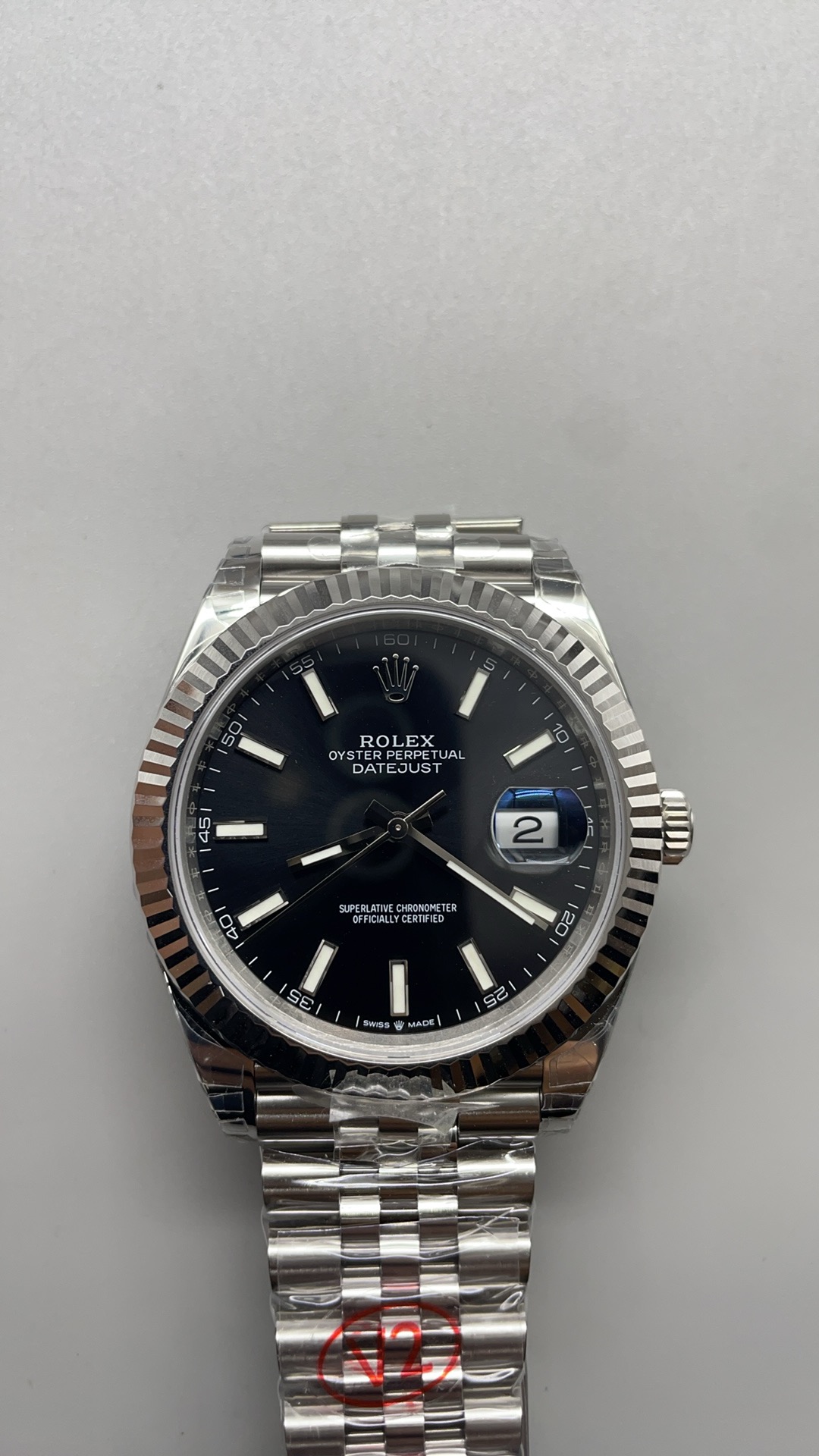
A warranty card attached to a VS factory listing proves almost nothing by itself. Genuine warranty documentation works as a system: the card, the watch's serial, the selling dealer's record and the brand's database all have to agree before the paper means anything. A replica listing usually supplies only a card-shaped object, often reproducing a genuine card's layout. Read the paperwork as one more claim rather than as evidence.
What genuine warranty documentation records
A genuine Rolex warranty card records the model reference, the serial number, the purchase date and the name of the authorized dealer that sold the watch. An Omega card carries the 14-digit PIC number and the reference, and Master Chronometer models add the METAS certification card. Cartier and Tissot cards follow the same pattern — model, serial, dealer and date, each in the brand's own format — so the structure is universal even when the layout differs. The value of these documents is not the card itself but the linkage: the serial ties the card to one physical watch, and the dealer's record ties that watch to a sale the brand can confirm. A counterfeited card reproduces the layout while breaking every one of those links. For a buyer, the test of any document is therefore simple: can the issuer named on it be contacted, and will they confirm it? If not, the document has already failed the only test that matters.
Why cards fail as proof on replica listings
Cards are counterfeited at scale, and a card is easier to fake than a watch. Sellers attach generic or copied cards to unauthorized replicas, sometimes stamping the same serial onto the card and the case engraving — which shows only that both were printed together, not that either is genuine. An open card claim, meaning the card was never filled in or registered, is another common pattern: it explains away the missing dealer record while providing nothing in its place. The same applies to boxes, hang tags and certificates, which are reproduced in bulk and travel with the watch as decoration. A useful rule of thumb: if the documents would still accompany a different watch without anyone noticing, they are not tied to this watch, and they prove nothing about it. Because the documents travel with the watch rather than verifying it, their persuasive power comes from looking right — and looking right is exactly what counterfeiters optimize for.
What provenance would actually look like
Real provenance is a chain of checkable records, not a stack of props. For a genuine watch it might be the original purchase receipt from a named authorized dealer, a service invoice from a recognized service center and a warranty card whose serial matches the watch — each document independently verifiable by contacting the issuer. None of those links can exist for an unauthorized replica, because there is no authorized dealer, no brand warranty and no database. That absence is structural, not a paperwork oversight, and no amount of boxes or certificates fills it.
Paperwork red flags
- A serial on the card that does not match the case, lugs or rehaut.
- A reference format that does not fit the claimed model or brand.
- A missing or generic dealer name, or no purchase date.
- An emphasis on the box, hang tag and plastic wrapping over the documentation itself.
- Documents described as copies, scans or printable templates.
A decision framework for documents
- Treat every document as a claim. The default assumption is that the paper is a replica too.
- Check internal consistency. Serial, reference and model must agree across the card, the case and any other marking.
- Compare against genuine examples. Card layouts change by brand and era; hold the listing's card next to a known-genuine example of the same era.
- Ask what recourse the paperwork actually provides. For unauthorized goods the answer is typically none — there is no brand warranty, no dealer and no database to claim against.
- Keep the documents out of the pricing decision. If the paperwork is unverifiable, the watch should be priced as though the paper does not exist.
For the broader question of how provenance fits into authentication, see identifying counterfeit watches. The guide to replica grading claims covers why the grade labels on the same listings deserve equal skepticism, Rolex documentation explains what genuine paperwork looks like, and the FAQ answers related buying questions. The maker label itself is addressed in the VS factory overview.
Frequently asked questions
Does a warranty card make a replica listing more trustworthy?
No. Cards are counterfeited alongside watches, and a card proves nothing without a dealer record and a brand database entry that match the serial.
What is an open card?
A card that was never completed or registered. It is a common way of explaining missing dealer records and provides no verification of anything.
Can I check a serial against the brand's database myself?
Generally not as a private buyer. Brands verify serials through authorized dealers, so most buyers cannot confirm a watch's history directly.
What paperwork would actually matter?
A document trail a buyer can verify independently — receipts from a named, checkable seller — and even that does not authenticate the watch itself.
هذا المحتوى مخصص للتثقيف العام في عالم الساعات. وهو لا يتحقق من أي منتج بعينه ولا يضمن الأصالة، ولا يرتبط بأي علامات تجارية أو مصانع تابعة لجهات خارجية.
