
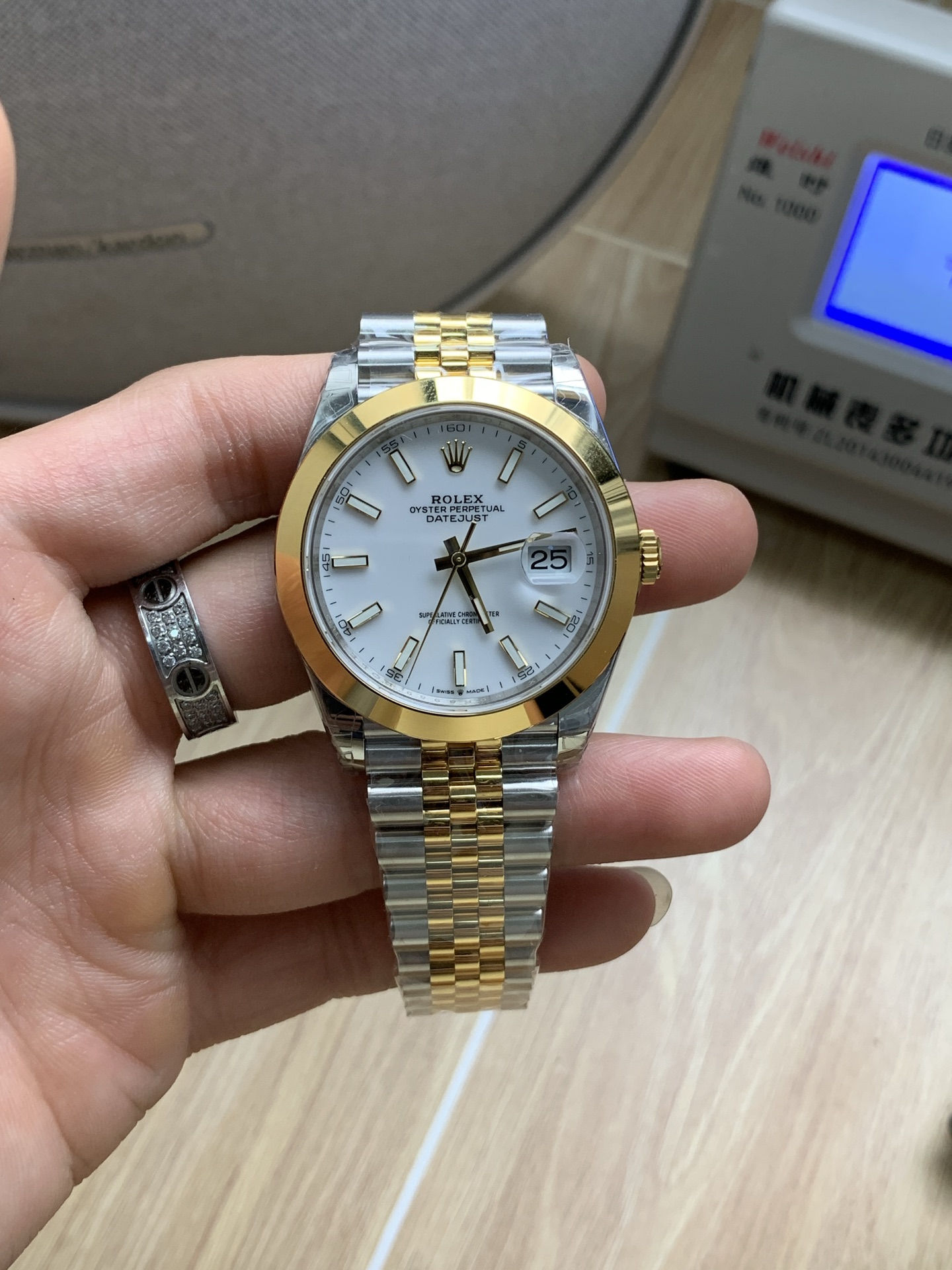
Routine cleaning is safe for any watch when the crown is fully seated and the seals are sound. On a VS factory watch, seal condition is unverified — the depth rating in the listing was never tested — so the sensible rule is to treat the watch as splash-resistant and keep water exposure deliberate rather than habitual.
The baseline rule
Every precaution below rests on one habit: keep the crown pushed or screwed all the way in, because the crown is the most common point of moisture entry on any watch. Do not operate chronograph pushers underwater. And remember that gaskets age on their own schedule; a piece whose sealing has never been tested should pass a pressure test before any planned immersion. The standards behind all of this are in watch water resistance explained.
Cleaning practices compared
| Situation | Safe practice | What to avoid |
|---|---|---|
| After saltwater or pool exposure | Rinse with fresh water, dry with a soft cloth | Letting chlorine or salt dry on the case and seals |
| Everyday cleaning | Damp soft cloth; with the crown sealed, mild soap and lukewarm water | Hot water, steam, or ultrasonic cleaning without confirming the case is sealed |
| Leather strap | Remove the strap before washing the case; keep leather dry | Soaking or soaping leather, which stiffens and stains it |
| Metal bracelet | Soft brush, mild soap, lukewarm water, then rinse and dry | Abrasive polishes and metal wools |
| Condensation inside the crystal | Stop wearing the watch and take it to a watchmaker | Wearing it while fogged, or heating it to force the moisture out |
| Sauna or hot shower | Leave the watch off the wrist | Hot water and steam, which stress gaskets through thermal expansion |
What deliberate exposure means
Deliberate means the crown is sealed, the watch has passed a pressure test at the depth you intend, and the exposure has a purpose — a swim, a day on the water — followed by a rinse and a dry. Habitual means wearing it in the shower every morning because the listing said 100 meters. A shower's heat and steam stress gaskets more than a pool does, and an untested seal chain has no margin to spend. If the watch has never been pressure-tested, the honest rating is zero meters until a watchmaker says otherwise.
The crown check that precedes every wash
Before any contact with water, confirm the crown is fully home: screw-down crowns thread until they stop, and push-pull crowns click into place. A watch washed with a loose crown is a watch being washed on the inside. After drying, wipe the case with a soft cloth and let the bracelet dry completely before wearing it again — trapped water between links and skin is a minor irritant and a major smell after a few weeks. These habits matter on any watch; on a piece with unverified sealing, they are the whole water strategy.
Moisture warning signs
Two signs mean moisture has already entered: fog under the crystal that does not clear at room temperature, and visible droplets inside. Neither resolves itself. Moisture inside a case corrodes pivots and dials, and the cost of ignoring it grows with every week it sits. If condensation appears, open nothing yourself; take the watch to a watchmaker who can dry the movement and replace the gaskets that failed. Drying and resealing a case is service work, not a DIY job. Note that a watch moved from cold water into warm air can fog briefly even when sealed; the test is whether the fog clears within minutes and never leaves droplets. Persistent fog is the signal that separates optics from ingress.
Storage and climate notes
Store the watch in a dry place, out of the bathroom, and avoid leaving it in humid environments for long stretches. If you live somewhere humid, a silica packet in the watch box is a cheap safeguard; air conditioning and heating both dry room air, and it is humidity, not temperature, that matters most for storage. Leather straps need the opposite care from metal ones, and the trade-offs between the materials are compared in the strap comparison. For the full maintenance routine that keeps a mechanical watch healthy, the mechanical watch care checklist covers winding, storage and service intervals.
Frequently asked questions
Can I shower with a factory-labeled watch?
Not advised. Hot water and steam stress gaskets through thermal expansion, and sealing on these watches is unverified.
What should I do if condensation appears inside?
Stop wearing the watch and take it to a watchmaker. Moisture inside a case corrodes movements, and it will not dry out on its own.
How often should seals be checked?
Before each season of water exposure, and whenever the case is opened — a battery change breaks the seal chain until the back is reseated.
Is a quick splash of water dangerous?
With the crown fully seated, a splash is low risk. Dry the watch afterward, and do not confuse a splash with swimming.
هذا المحتوى مخصص للتثقيف العام في عالم الساعات. وهو لا يتحقق من أي منتج بعينه ولا يضمن الأصالة، ولا يرتبط بأي علامات تجارية أو مصانع تابعة لجهات خارجية.

