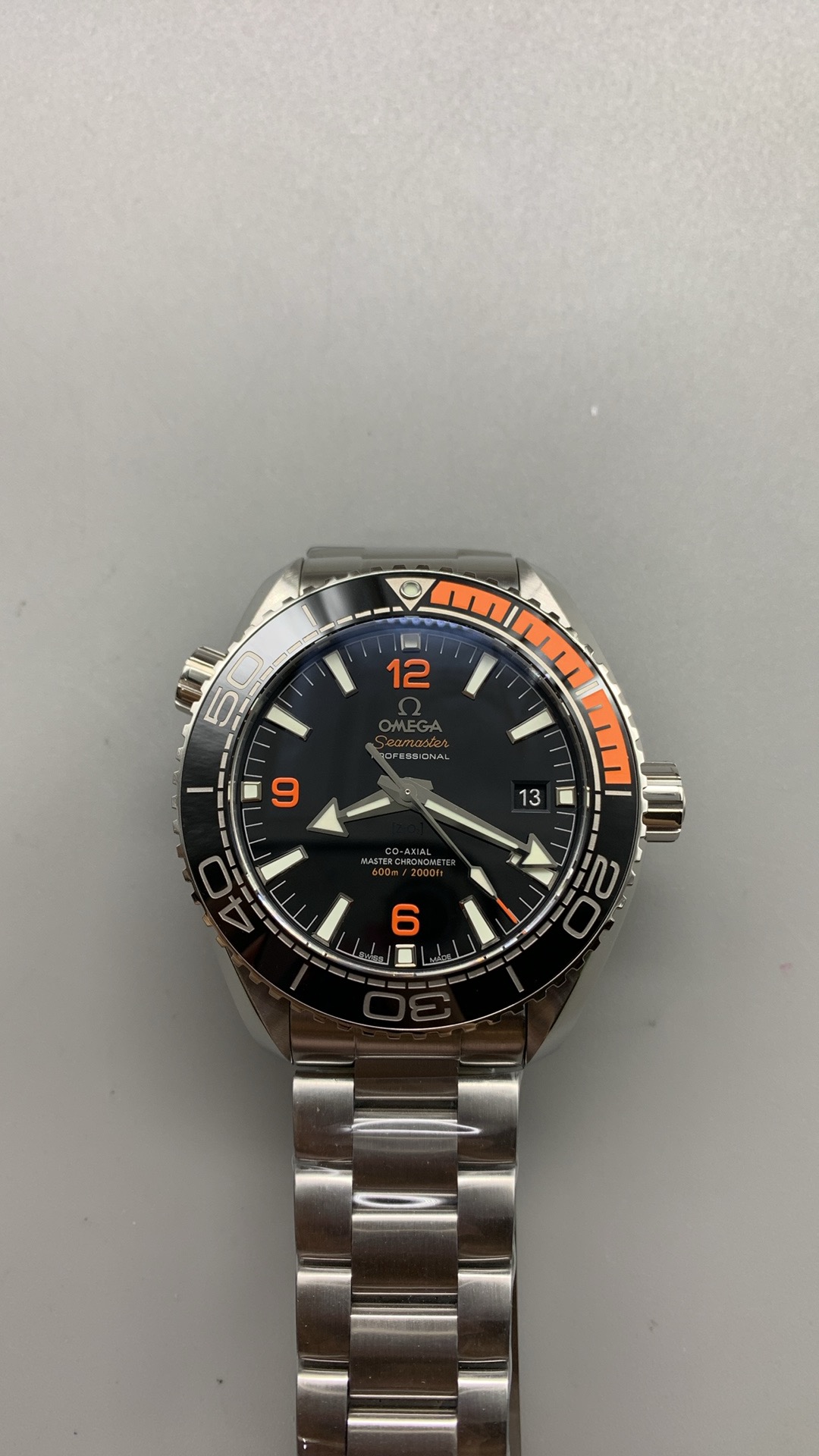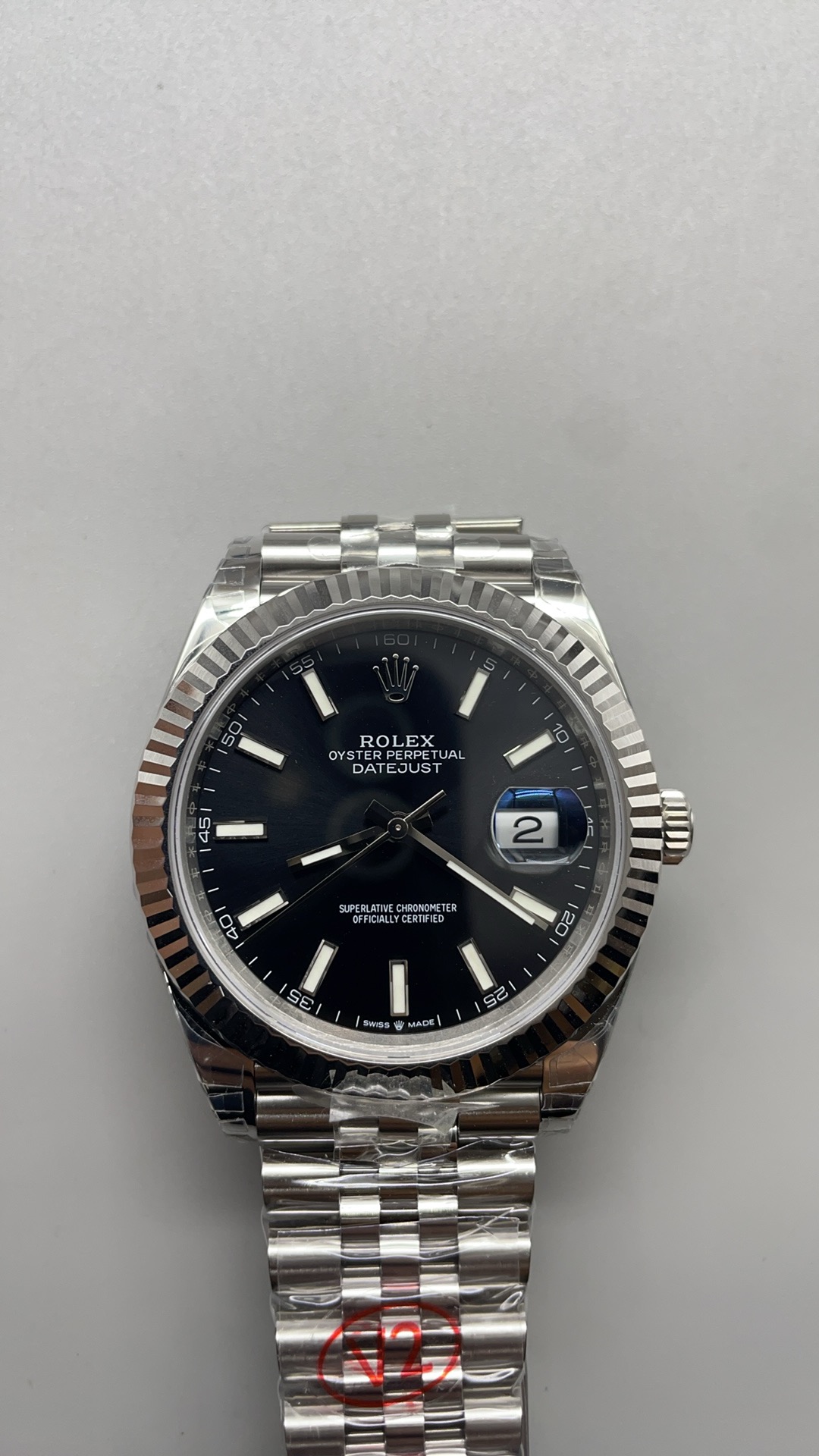
Timekeeping and power-reserve claims on a replica listing are checked with two simple tools: a timing machine (timegrapher) to measure rate, amplitude, and beat error, and a clock to run a full-wind run-down test. The machine turns vague seller claims into numbers; the run-down test shows how long the watch actually runs on a full wind. Neither test is expensive or exotic, which is why "seller-tested" photos prove so little.
Before the readings, the same framing applies here as everywhere in the replica market: "AAA-grade" is a seller term with no official standard behind it, and a timegrapher photo from a seller is a photo, not a measurement you can rely on. The readings only count when they come off your machine, from the watch in your hand.
Rate: seconds per day
Rate is how many seconds per day the watch gains or loses, averaged over a measurement window. Modern mechanical watches from reputable brands are regulated to tight tolerances; COSC chronometer certification, for example, requires an average daily rate between -4 and +6 seconds. Many decent non-certified mechanical watches run within roughly 10 to 15 seconds per day. A timegrapher displays rate almost instantly, which is convenient and also the trap: a single dial-up reading is one position out of five or six the watch will actually live in. Positional variation — the same watch gaining seconds dial up and losing them crown down — is normal mechanical behavior, and the point of regulation is to balance it.
Amplitude: how far the balance swings
Amplitude is the rotation of the balance wheel from its rest position, measured in degrees. A healthy mechanical movement at full wind typically reads between about 250 and 310 degrees. Low amplitude — under roughly 200 degrees — suggests poor lubrication, dirt, or a tired mainspring, and it is one of the most useful health signals a timegrapher gives. One caveat: amplitude is calculated from the lift angle you enter into the machine, and a common default is 52 degrees. Entering the wrong lift angle changes the displayed amplitude without changing rate or beat error, so amplitude comparisons only make sense at the same setting.
Beat error: the balance's symmetry
Beat error measures the asymmetry between the balance's two swings, in milliseconds. A well-regulated movement shows a small beat error, commonly under about 0.5 to 1.0 ms; a large beat error can limit how accurately the watch can be regulated at all. On an unofficial watch, a beat error that jumps around between readings can point to a movement that was assembled or regulated carelessly — a measurement, not a rumor.
Power reserve: the run-down test
Power reserve is how long a fully wound watch runs until it stops, and it is the easiest claim to verify without any machine. Fully wind the crown until it stops turning, note the time, and check when the hands stop. The result is the real figure. Published reserves for common movements give useful benchmarks: the ETA 2824 family is rated around 38 hours, the Miyota 8215 about 42, the Seiko NH35 about 41, and the Powermatic 80 — the movement behind Tissot's current three-hand automatics — around 80 hours. A watch advertised as "72-hour power reserve" that stops after 30 hours has failed the simplest test there is.
On a replica listing, power-reserve claims deserve special suspicion because the figure is often copied from the genuine watch's spec sheet. A copy that looks like a watch with a 70-hour caliber may contain a 40-hour workhorse movement; the run-down test exposes the difference in two days. No forum-grade label, from "AAA" to "super clone," changes what the watch actually does — see how these grading claims are actually used.
What a seller's timegrapher photo does and does not prove
Listings frequently include a photo of a timegrapher screen showing a tidy result, often with a "regulated" or "tested" claim attached. Treat it as marketing. The photo shows one watch, one moment, one position, and a machine setting you cannot see; it cannot be connected to the watch you receive, and there is no independent verification behind it. The same logic applies to any movement-related claim: the only measurement that matters is one you make yourself.
A five-minute verification routine
- Read the listing's claimed accuracy and power reserve; write both down.
- Fully wind the watch and start the run-down clock.
- Place it on the timegrapher, dial up, and record rate, amplitude, and beat error.
- Repeat in one or two other positions — crown down, dial down — and note the spread.
- Check the time after 24 hours, then again when the watch stops.
- Compare your numbers with the listing's claims.
None of this is about certificates. It is about replacing adjectives with numbers. A watch that runs within reasonable limits and delivers its claimed reserve is, mechanically, what it says it is; a watch that fails these simple checks fails them regardless of the grade printed in the ad. If you own a mechanical watch — genuine or not — the same routine doubles as basic health monitoring, which we cover in the mechanical watch care checklist.
Frequently asked questions
What amplitude reading should a healthy watch show?
At full wind, most healthy mechanical movements read roughly 250 to 310 degrees. Readings below about 200 degrees suggest lubrication or assembly problems and are worth investigating.
What does COSC mean in a watch listing?
COSC is the Swiss chronometer certification body that tests uncased movements and certifies those meeting an average daily rate between -4 and +6 seconds. A replica listing that borrows the word is borrowing marketing, not a certificate.
Can I measure power reserve without any tools?
Yes. Fully wind the watch, note the time, and let it run until it stops. The elapsed time is the actual power reserve — the simplest check in watchmaking.
Why does my timegrapher show different amplitude than the seller's photo?
Amplitude depends on the lift angle setting, wind state, and position. Different settings produce different numbers, which is one reason a seller's screenshot cannot be compared with your reading.
هذا المحتوى مخصص للتثقيف العام في عالم الساعات. وهو لا يتحقق من أي منتج بعينه ولا يضمن الأصالة، ولا يرتبط بأي علامات تجارية أو مصانع تابعة لجهات خارجية.